
FILTER
FILTER
Pearl - WC204-511
This product is no longer available for sale
These models in stock may be of interest to you:




380,83 €
excl VAT
Guarantee 3
years

Fred

Eric
Do you need help?
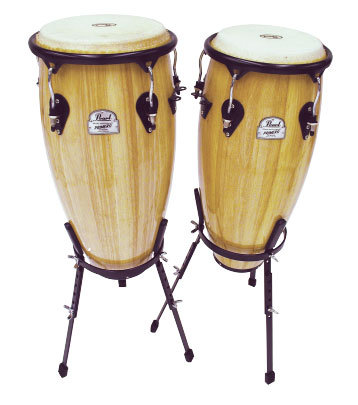
Pair of 10''+11'' natural colored bongos, in Siamese oak, delivered with two individual cradles. Pearl gives us access to 100% oak bongos for a ridiculous price! The careful finishes and sounds of these Primero bongos make them an incomparable best seller.
ARTICLE N° 38984
Pearl - WC204-511
Pearl - WC204-511
380,83 €
excl VAT
Guarantee 3
years
Fred
Eric
Do you need help?
Presentation
From beginner to professional, this wide range of Pearl congas, quintos and tumbas will impress you with their exemplary sounds and finish.
Ideal for getting started, the Primero offer unbeatable value for money.
Ideal for getting started, the Primero offer unbeatable value for money.
Other features
-
Pearl WC204-511
-
Pair of bongos 10''+11'' natural color
-
100% Siam Oak,
-
Dimensions: 10” and 11”
-
Natural skins
-
Curved “Contour Crown” rims
-
Black hardware
-
Comes with two individual cradles
To find out more...
The bongo or bongó is a percussion instrument from Cuba that has spread throughout Latin music. It is a pair of united drums, each with a membrane and one of which is larger than the other.
The bongo consists of a pair of cylinders or cone trunks, made of wood or synthetic fiber, each equipped with a single membrane. These barrels of the same height (20 cm) have different diameters (approximately 20 and 30 cm).
Originally, they were paired together using a strip of fabric and the percussionist placed the set on his thigh to play. Quickly, this piece of textile was replaced by a piece of wood allowing the instrumentalist to wedge the drums between his knees. In early times, (calf) skins were heated in a flame to tune the instrument.
The bongo consists of a pair of cylinders or cone trunks, made of wood or synthetic fiber, each equipped with a single membrane. These barrels of the same height (20 cm) have different diameters (approximately 20 and 30 cm).
Originally, they were paired together using a strip of fabric and the percussionist placed the set on his thigh to play. Quickly, this piece of textile was replaced by a piece of wood allowing the instrumentalist to wedge the drums between his knees. In early times, (calf) skins were heated in a flame to tune the instrument.
Spotlight on

Pearl is
the world reference of acoustic drums. As a beginner with the Pearl Target,
during your first gigs with the Forum FZ, or for the studio and the stage with the Vision VBX or VMX series, you will always find the Pearl Drum set that will suit you!
Equivalent products




Tops of the brand
Pearl - WC204-511
380,83 € excl VAT