
FILTER
FILTER

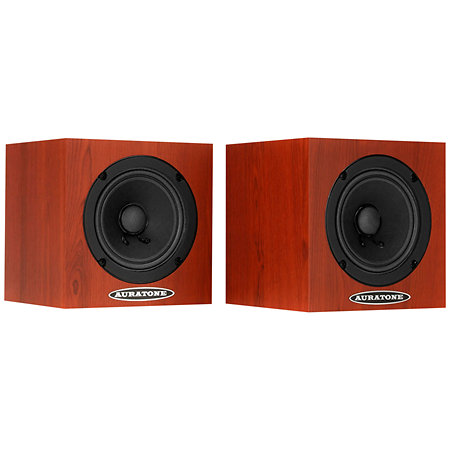
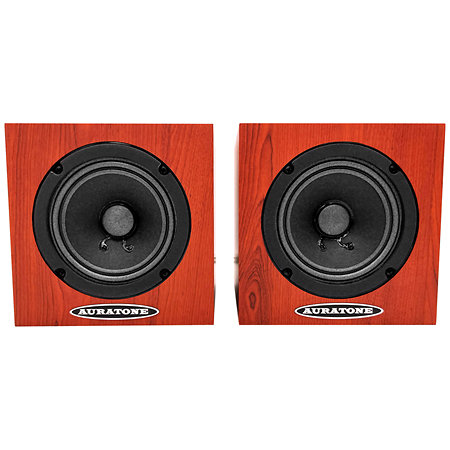
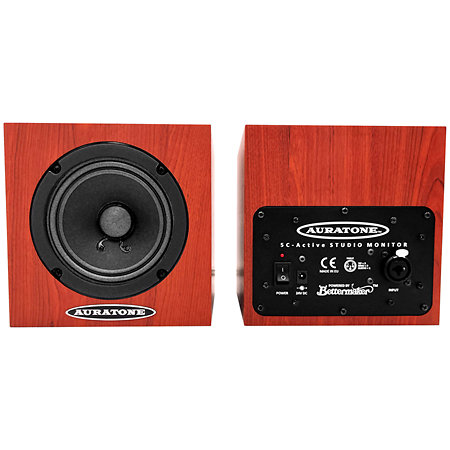


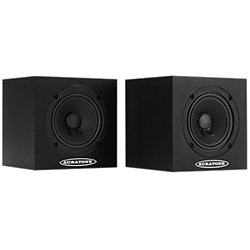
Auratone - 5C Active Sound Cube Classic (la paire)
640,83 €
excl VAT
including eco-part : 0,90 €
In Stock
Usually ships within 4 days
+infos
Guarantee 3
years

Anais

Tristan
Do you need help?
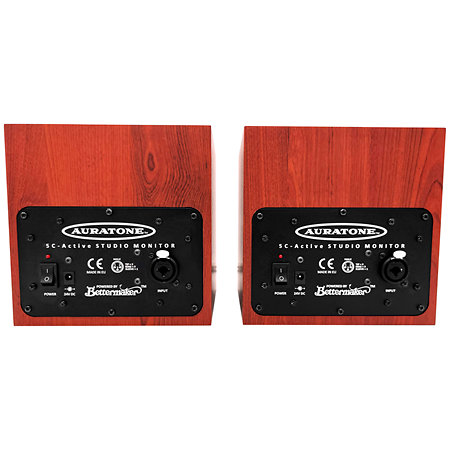
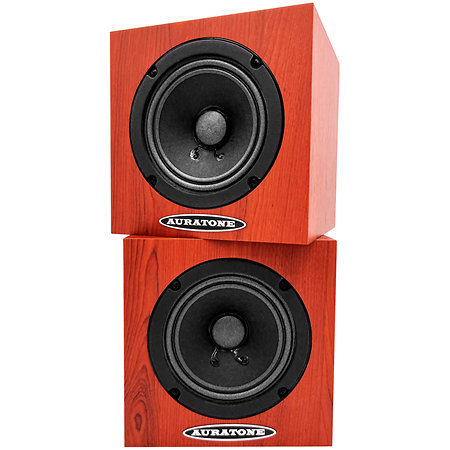
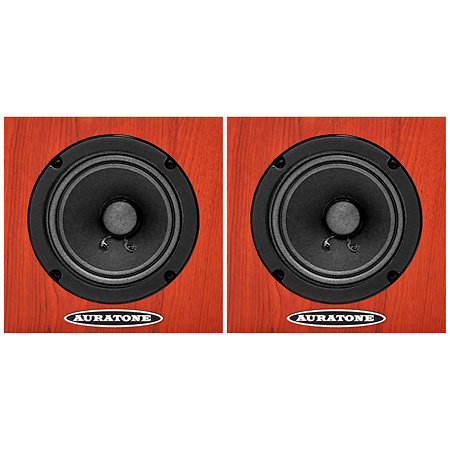
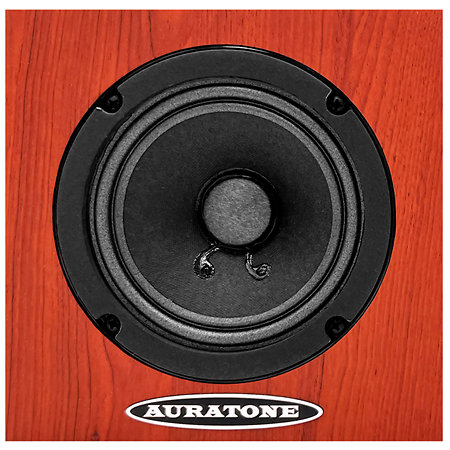
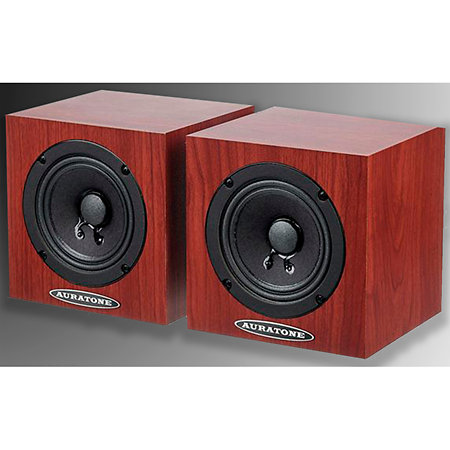
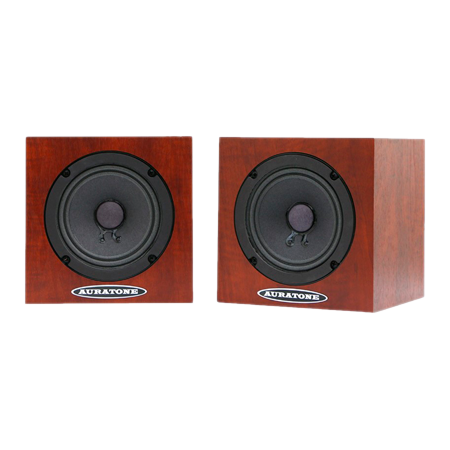
Auratone 5C Active Sound Cube Classic Wood (pair). These reference speakers have their own class D amplifier (active). Their objective
ARTICLE N° 104630
Auratone - 5C Active Sound Cube Classic (la paire)
Auratone - 5C Active Sound Cube Classic (la paire)
640,83 €
excl VAT
including eco-part : 0,90 €
In Stock
Usually ships within 4 days
+infos
Guarantee 3
years
Anais
Tristan
Do you need help?
Presentation
The goal of the Auratone 5C Active Super Sound Cubes isn't to embellish the music they play, but to reveal all its flaws and mixing issues, particularly in the midrange. They are therefore particularly suited for controlling vocal mixing and reverb settings.
These 5C Active Sound Cubes are a modern reissue. They retain the design and sonic character of the originals, while incorporating technological improvements: the "Active" version is amplified, eliminating the need for a power amp.
Although consumer audio systems have evolved, the Auratone 5Cs remain a valuable tool for sound engineers. They are often used alongside monitoring speakers with greater power and frequency ranges.
These 5C Active Sound Cubes are a modern reissue. They retain the design and sonic character of the originals, while incorporating technological improvements: the "Active" version is amplified, eliminating the need for a power amp.
Although consumer audio systems have evolved, the Auratone 5Cs remain a valuable tool for sound engineers. They are often used alongside monitoring speakers with greater power and frequency ranges.
Other features
-
Auratone 5C Super Sound Cube Wood Grain (pair)
-
Monitor Type: Active, Full-Range
-
Compact Class-D Power Amplifier, Auratone A2-30
-
Developed in collaboration with Bettermaker
-
Amplifier Power: 50 Watts into 8 Ohms (0.05% THD+N)
-
Driver: 4.5" Full-Range
-
Frequency Response: 80-15,000 Hz
-
Signal-to-Noise Ratio: > 100dB
-
Inputs: 1 x XLR + TRS Combo
-
Overcurrent, Overheating, and Short-Circuit Protection
-
On/Off Switch + Power LED
-
Weight (pair): 7kg
-
Dimensions (W x H x D): 165 x 165 x 152mm
-
Made in the USA
To find out more...
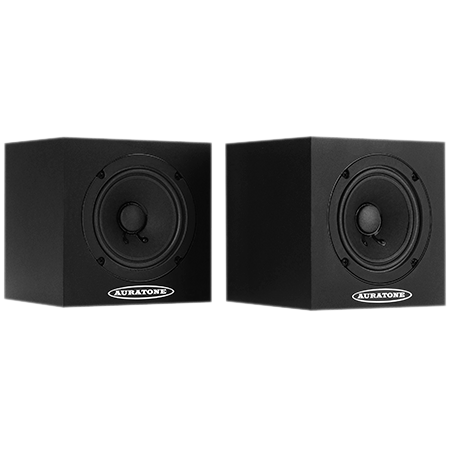
Available in a black finish
Introduced in the 1970s, these mics have become a standard in recording studios around the world. They were used to check how a mix would sound on consumer audio systems, such as car radios or televisions. Their limited bass and treble reproduction allowed for a focus on the midrange, where most vocals and key instruments are located.
Introduced in the 1970s, these mics have become a standard in recording studios around the world. They were used to check how a mix would sound on consumer audio systems, such as car radios or televisions. Their limited bass and treble reproduction allowed for a focus on the midrange, where most vocals and key instruments are located.
You may also like


Spotlight on

Equivalent products

Auratone - 5C Active Sound Cube Classic (la paire)
640,83 € excl VAT