FILTER
FILTER

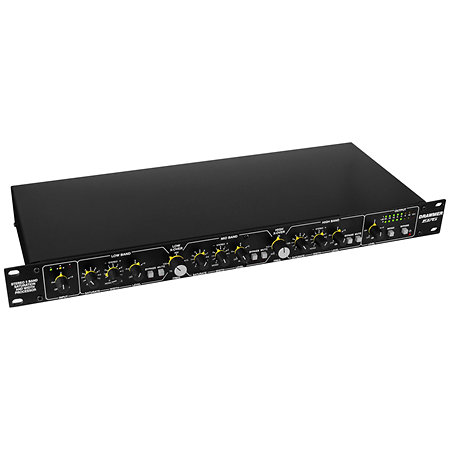
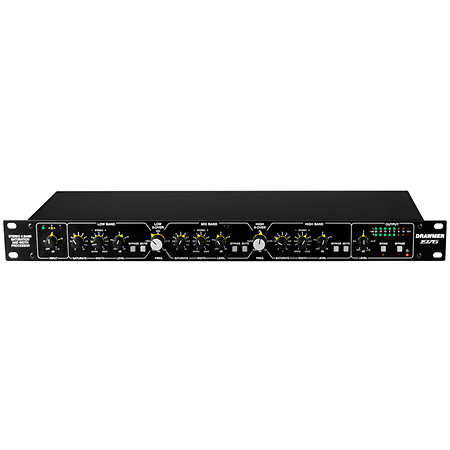
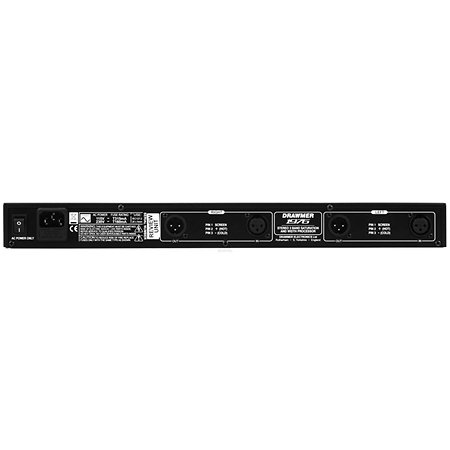
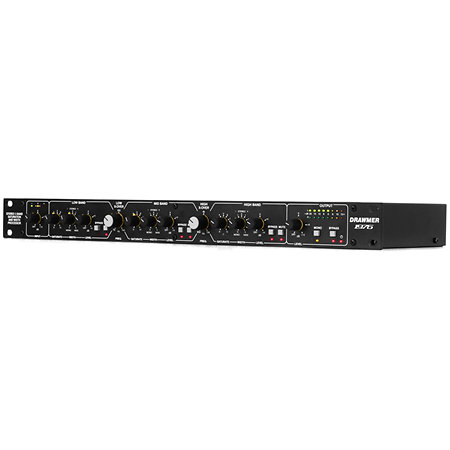
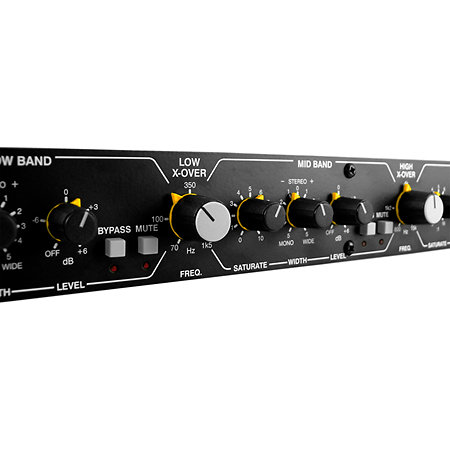
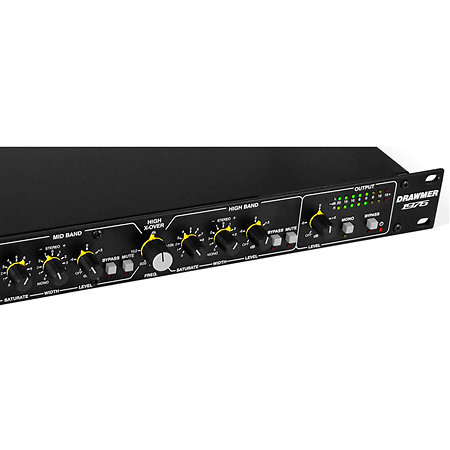
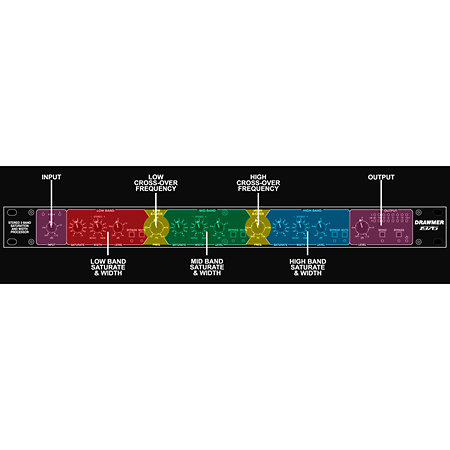
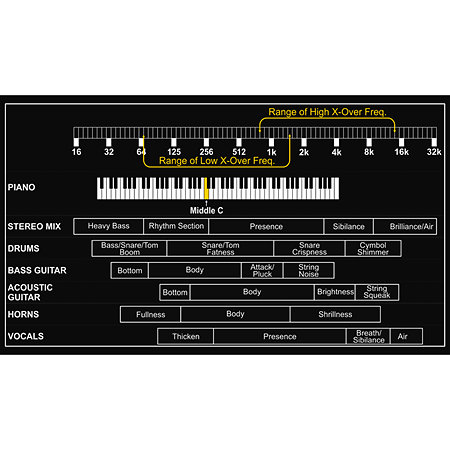


Drawmer - 1976 Stereo 3-Band Saturation and Width Processor
New
904,17 €
excl VAT
including eco-part : 0,07 €
Out of stock
Guarantee 3
years

Anais

Tristan
Do you need help?
The Drawmer 1979 delivers an analogue sound signature inspired by 1970s circuitry, with a design intended to enrich audio sources through musical harmonic saturation. Its architecture allows you to shape the depth of sound and spatial balance with great finesse. The controls dedicated to different frequency bands open up a vast creative scope for modern productions.
ARTICLE N° 125409
Drawmer - 1976 Stereo 3-Band Saturation and Width Processor
Drawmer - 1976 Stereo 3-Band Saturation and Width Processor
New
904,17 €
excl VAT
including eco-part : 0,07 €
Out of stock
Guarantee 3
years
Anais
Tristan
Do you need help?
Presentation
The Drawmer 1979 stereo saturation processor is an analogue device designed for sound processing in the studio and for audio broadcasting. It adds harmonic colour to recordings via three independent saturation bands, allowing the bass, midrange and treble to be targeted separately.
This design makes it easy to create a variety of textures, whether using a subtle touch to add warmth or a more pronounced approach to enhance the sound’s character. The controls are organised within a clear interface, like a toolbox where each knob tells its own story.
With its Width control spread across three bands, the 1979 allows you to adjust the stereo image to suit the needs of the mix. This function acts on the frequency width using Mid-Side processing, altering the sense of space without losing the overall coherence of the signal. Frequencies can thus gain a sense of openness or retain a more central position, depending on the artistic choices made. This approach provides greater control when constructing a balanced soundscape.
The analogue saturation built into this studio unit acts as a distinctive sonic signature, adding natural harmonics to the processed tracks. Drums can gain in density, bass can be given greater presence, and synthesisers can regain a more organic texture.
Vocals also benefit from enhanced detail thanks to precise processing of the various frequency bands. The fully analogue circuit retains a musical approach derived from vintage equipment, with a response suited to modern productions where every nuance counts.
The 1979’s true stereo operation simplifies the processing of complex sources thanks to a shared control for both channels. A mono mode is also available to check phase and soundstage during adjustments. This design facilitates integration into various studio set-ups, featuring a low-noise internal toroidal linear power supply and a voltage selector suitable for international use.
This design makes it easy to create a variety of textures, whether using a subtle touch to add warmth or a more pronounced approach to enhance the sound’s character. The controls are organised within a clear interface, like a toolbox where each knob tells its own story.
With its Width control spread across three bands, the 1979 allows you to adjust the stereo image to suit the needs of the mix. This function acts on the frequency width using Mid-Side processing, altering the sense of space without losing the overall coherence of the signal. Frequencies can thus gain a sense of openness or retain a more central position, depending on the artistic choices made. This approach provides greater control when constructing a balanced soundscape.
The analogue saturation built into this studio unit acts as a distinctive sonic signature, adding natural harmonics to the processed tracks. Drums can gain in density, bass can be given greater presence, and synthesisers can regain a more organic texture.
Vocals also benefit from enhanced detail thanks to precise processing of the various frequency bands. The fully analogue circuit retains a musical approach derived from vintage equipment, with a response suited to modern productions where every nuance counts.
The 1979’s true stereo operation simplifies the processing of complex sources thanks to a shared control for both channels. A mono mode is also available to check phase and soundstage during adjustments. This design facilitates integration into various studio set-ups, featuring a low-noise internal toroidal linear power supply and a voltage selector suitable for international use.
Other features
-
Drawmer 1976
-
Studio equipment
-
Saturation & Width processor
-
Circuitry: Fully analogue
-
Country of manufacture: United Kingdom
-
Channels: Stereo
-
Bands: 3-band
-
Technology: M/S encoder/decoder
-
Saturation: Independent 3-band analogue saturation
-
Stereo width: Independent 3-band control
-
Switchable stereo or mono modes
-
Frequencies: Variable crossover points
-
Frequency response: 20 Hz ⭢ 20 kHz
-
Distortion: 0.007% THD & noise @ 1 kHz
-
Max. input level: +26 dBu
-
Max. output level: +26 dBu
-
Input impedance: ≥20 kΩ
-
Output impedance: <100 Ω
-
Crosstalk: <-75 dB at 1 kHz
-
.
-
Connectors:
-
Inputs: 2x XLR
-
Outputs: 2x XLR
-
Power supply: 115–230 V ∿, 50–60 Hz
-
230 V fuse: T160 mA
-
Standard 19" rack format, 1U
-
Dimensions: 482 x 202 x 44 mm
-
Weight: 2.8 kg
To find out more...
With the 1976, Drawmer offers producers, sound engineers and musicians a tool capable of combining the feel of vintage equipment with modern methods of audio production, without complicating the workflow.
The 1979 is ideal for use on a drum bus to add harmonic density to percussion and enhance its presence within an arrangement. The band-by-band control also allows you to maintain a controlled low-end foundation whilst enhancing the richness of elements in the higher frequencies.
In a music production chain, this analogue saturation processor can be used on synthesisers, guitars or vocals to impart a different colour depending on the selected source. Producers may seek a warmer texture for certain tracks, or adopt a more subtle approach to preserve the precision of a complete mix.
During mastering or pre-mastering, the multiband Width processing can be used to adjust the perception of the soundstage with targeted intervention. A controlled opening up of the high frequencies or a re-centring of the bass can help to create a more balanced stereo image, depending on the characteristics of the audio project.
The 1979 is ideal for use on a drum bus to add harmonic density to percussion and enhance its presence within an arrangement. The band-by-band control also allows you to maintain a controlled low-end foundation whilst enhancing the richness of elements in the higher frequencies.
In a music production chain, this analogue saturation processor can be used on synthesisers, guitars or vocals to impart a different colour depending on the selected source. Producers may seek a warmer texture for certain tracks, or adopt a more subtle approach to preserve the precision of a complete mix.
During mastering or pre-mastering, the multiband Width processing can be used to adjust the perception of the soundstage with targeted intervention. A controlled opening up of the high frequencies or a re-centring of the bass can help to create a more balanced stereo image, depending on the characteristics of the audio project.
Additional documents
You may also like


Spotlight on

Drawmer is
a well-known brand in the PA and studio universe, specialised in signal
processing devices. You are looking for a Noise Gate that does not only cut the
sound, go for the MX40. This quadruple Noise Gate allows an automatic setting
of the attack time and offers the Peak Punch function that adds more impact to
drum and percussive sounds.