
FILTER
FILTER

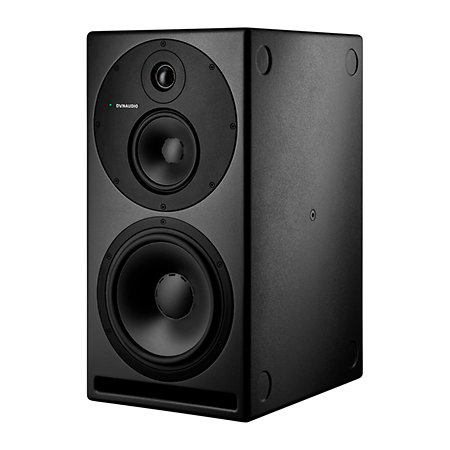
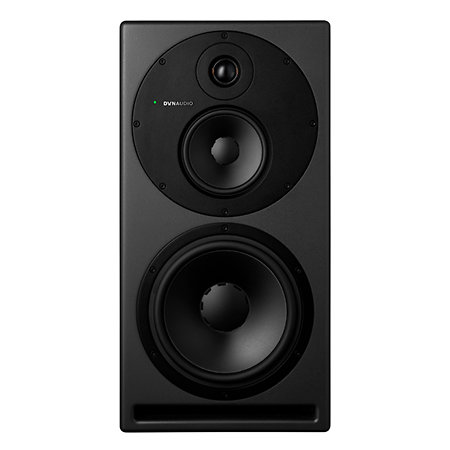
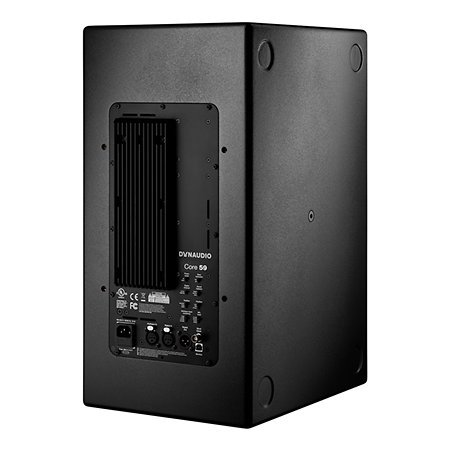
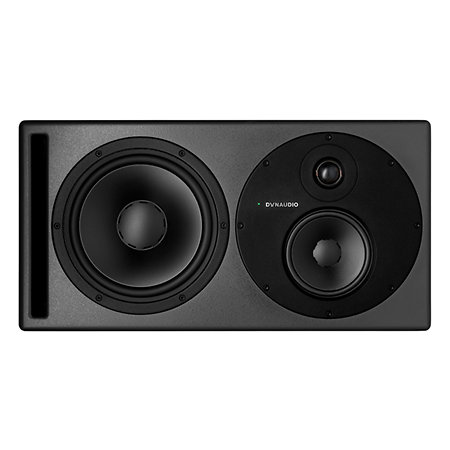


Dynaudio - Core 59
2 324,17 €
excl VAT
including eco-part : 0,90 €
In Stock
Usually ships within 3 days
+infos
Guarantee 3
years

Anais

Tristan
Do you need help?
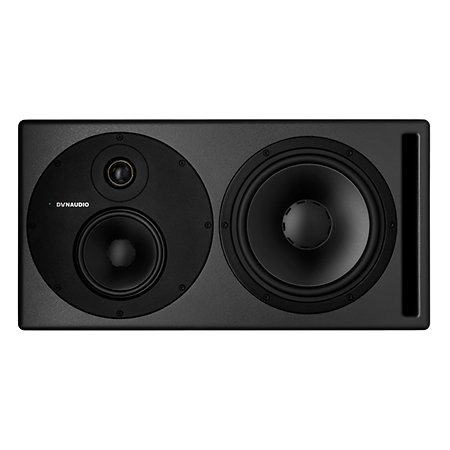
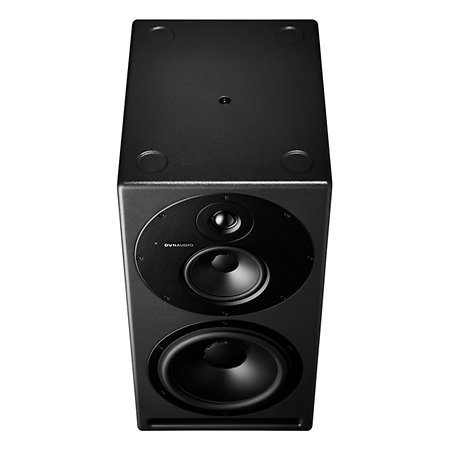
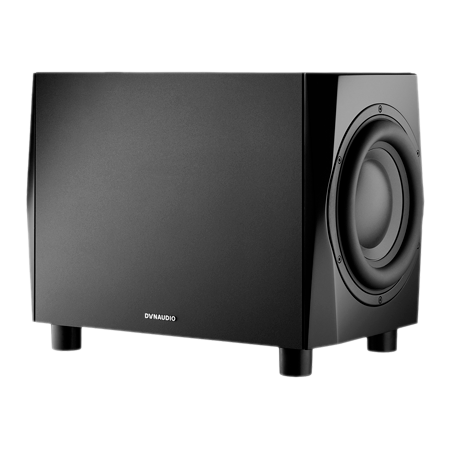
Dynaudio Pro Core 59, 3-way 5" and 9" studio monitor with 1150 W class D (digital) amplification, analogue/digital connectivity and DSP. Can be used vertically or horizontally.
ARTICLE N° 67135
Dynaudio - Core 59
Dynaudio - Core 59
2 324,17 €
excl VAT
including eco-part : 0,90 €
In Stock
Usually ships within 3 days
+infos
Guarantee 3
years
Anais
Tristan
Do you need help?
Presentation
Core 59 - Three-channel studio monitor
The Core 59 represents the ultimate in precision, consistency and reliability for your studio.
When you're working on a work of art (whether you're the author or someone else is) you need equipment you can trust. A professional producer or sound engineer is part of the creative process and their ears are their most reliable tools. They know what sounds good and that a good reference monitor can help them turn a good performance into a great one.
The Core 59 (the flagship of our series of high-end professional reference monitors) is that monitor. This three-way speaker offers uncompromising Class D amplification, state-of-the-art digital signal processing, a super-thin 32mm baffle and smooth bass response down to 42Hz with -6dB at 36Hz.
This is a serious system designed for serious sound professionals. The Core 59 is made for those very demanding environments where sound engineers, mixers, producers and editors work. It has been specifically designed to solve many of the monitoring problems that seasoned professionals face every day.
Fatigue-free listening all day (and all night)
Listening fatigue is the Achilles heel of every studio engineer. Once it's there, there's no point in going on. The Core 59's brand new Esotar Pro tweeter has been designed to prevent fatigue and keep you going until the end of the mix.
We've long been known for our soft dome tweeters and the smoothness of their sound. They deliver hours of perfect spatiality and detail without the fatigue that characterises other designs. The Esotar Pro builds on this heritage with the ingenious Hexis device. This is an internal dome that sits just behind the diaphragm and optimises airflow, smoothes the frequency response and eliminates unwanted internal resonances. The result is exceptional spatiality, detailed transients and natural high-frequency response.
The speaker's 5-inch midrange driver delivers breathtaking detail. It uses our exclusive MSP (magnesium silicate polymer) material in its cone for the best combination of lightness, rigidity and damping. Combined with an aluminium voice coil, it offers incredibly fast response and absolute control thanks to its neodymium magnet system. With crossover points at 312 Hz and 5.1 kHz, the Core 59 makes up a much larger proportion of the vocal range with a single driver than conventional designs. This ensures that your mixing choices on vocal balance and dialogue subtleties are taken with confidence.
The Core 59's new woofer is the result of 18 months of in-depth research into subwoofer technology, including our 18S subwoofer, which goes down to 16 Hz. The result of this research is a new copper and glass fibre voice coil cylinder, driven by ceramic magnets and a 500 W Pascal Class D amplifier. It gives the 9 1/2-inch long-excursion woofer greater grip on the bottom end without sacrificing extreme frequency response.
And because every speaker is handcrafted in our factory in Denmark (we produce 1.4 million speakers every year for our living room speakers, custom installations, car audio and pro audio), we can maintain incredible consistency. This means you can use Core monitors in multiple studios, sounding the same at the same high volume. Everything you need to hear, wherever you are. If you need to replace a loudspeaker, you can do it yourself and calibrate it to within 0.2dB like the AIR series, or ask your support centre to do a full factory calibration.
Ultra-flexible positioning and Orbit baffle
When we revolutionised studio monitoring with the AIR series, we also revolutionised loudspeaker positioning. Literally. AIR made it possible to use a three-way loudspeaker in several orientations without compromising the phase response of the midrange and tweeter. This is thanks to the use of sealed midrange and tweeter assemblies that can be pivoted within the speaker cabinet.
The Core 59's Orbit baffle also rotates, so you can use it as a left, right or centre channel. You can even position the woofer above the tweeter/midrange assembly to place it in front of a console in an LCR line array.
Every application is unique and monitors may need to be placed in a variety of environments (sideways, vertically or even upside down), so we've provided recesses on all four sides of the Core 59. Simply place the special Dynaudio pads in these recesses to protect the enclosure and stabilise it on the mounting surface.
Core 59 is also compatible with standard VESA mounting brackets or our custom K&M bracket if you want to mount it on walls or ceilings within a multi-channel or immersive reference system such as Dolby Atmos.
A sophisticated DSP that's surprisingly easy to use
The AIR series was renowned for its sophisticated DSP system. But our acoustic engineers don't believe in resting on their laurels, so they're constantly looking for new and better ways to do things. This work has led to major advances not only in perfecting DSPs, but also in the way they are applied on a day-to-day basis. You, our users, wanted something easier to use, and that's exactly what Core delivers - with even better performance.
Positioning is essential when installing a monitoring system. That's why every Core 59 has two DSP crossover switches to adapt to the positioning of the speaker and the specifics of each location. For example, if you place the monitors above the VU meters of a large-format mixing console, set them to 'Desk'. This will compensate for the first reflection created by the surface of the console. On the other hand, if you place the monitors in a purpose-built wall, set the Position 1 filter to "Soffit" to compensate for the increased bass response.
The boundary effects created by placing a monitor close to walls or ceilings can be compensated for by setting the Position 2 filter to either 'Wall' or 'Corner'. These filters help to compensate for reflections created by dividing walls, particularly at low frequencies. There is also a low-frequency Linkwitz-Riley filter at 80 Hz that can be activated if you use the Core 59 with a subwoofer to extend the low-frequency response.
Users can also change the overall appearance. The Core 59 uses the same concept as the Sound Balance crossover from the LYD series. This is a different design to the typical Shelve equalizer settings for the tweeter and woofer found on most active monitors. Instead of simply lowering or raising the tweeter level, which will affect the phase response, the Core 59 uses a full-spectrum bandpass filter that switches according to the desired tonal response. In the 'Dark' setting, the entire frequency response slopes so that at 20kHz there is an attenuation of -1.5dB, while at 20Hz there is an increase of +1.5dB. In "Bright" mode, the slope is reversed (+ 1.5 dB at 20 kHz and - 1.5 dB at 20 Hz). This slight filter maintains the correct phase response between the loudspeakers while providing the tone that suits you. The changes are subtle, but often this small adjustment is enough to balance the sound perfectly.
Input sensitivity to suit you
The noise floor and signal resolution of any monitoring system are critical to its performance. Whether you're using analogue or digital inputs, you need to be able to control the gain distribution between the monitor controller and the loudspeaker system. We offer a range of 0dBu to +24dBu to match the sensitivity of the analogue input to the output level. Once optimised, the Core 59 processes all analogue signals at 192 kHz sampling rate and 64-bit resolution in the DSP (from the 24-bit analogue-to-digital converter) to achieve the highest degree of mathematical accuracy.
There is a switch to determine the maximum output sound pressure level with the greatest bit depth in the DSP. If you want maximum volume, set it to 112 dB. If you work mainly at lower volumes, choose a lower SPL setting to optimise the bit resolution of the DSP for both inputs.
When using the AES digital inputs, you need to determine which channel (left or right) of the AES stream is used for this monitor. The Core 59 DSP operates at the incoming sample rate and locks to the digital audio or word clock signal to keep the signal as accurate as possible.
The heart of your studio
We designed the Core 59 for you. We've designed it to be used wherever and whenever you need it, whether for near-field, mid-range or main monitoring, or in soffit-mounted installations. It's designed for mastering, mixing, music recording, soundtrack remixing, sound design or sound editing for games and anywhere else you need an uncompromising monitoring system.
The Core 59 is ready to be installed in immersive high SPL and other multi-channel audio environments with analogue and digital connectivity, DSP-controlled acoustic response and flexible positioning. This means complete tonal coherence whatever your monitoring needs.
It really does offer everything you need to hear.
Features
- Made by hand
Designed, developed, tested and manufactured in Denmark. All speakers are handmade at Dynaudio's headquarters and each speaker is individually calibrated before leaving our factory.
- Advanced DSP
Simple to use, yet incredibly powerful: it allows you to adapt the Core 59 to any listening environment.
The Core's DSP optimises performance for positioning, tonal balance and bass extension
- Power to spare
Each driver has its own dedicated Pascal Class D amplifier: 500 W each for the woofer and midrange and a 150 W amplifier for the tweeter. That's a real margin
- Esotar Pro tweeter
Dynaudio's already legendary high-frequency driver has been reimagined and redesigned for high-performance professional use.
- All-new drivers
Designed and manufactured in Denmark using our world-renowned Jupiter measurement laboratory
Tweeter - 1
Midrange - 5
Woofer - 9.5
- Extreme coherence
All Core speakers are 0.2dB apart for reliable multi-speaker configurations.
- Flexible cabinet positioning
Use it on all four sides and rotate the midrange/tweeter baffle for even more options.
- Easy to install
Use standard VESA brackets or install in soffit walls to suit your studio.
- Connectivity
Analogue digital and AES3 inputs
Maximum 24-bit/192kHz
Depending on input signal
- Maximum sound pressure level *
112 dB at 1 m anechoic, 118 dB semi-anechoic
- Crossover frequency
312.5 Hz (LF/MF) / 5100 Hz (MF/HF)
- Frequency response *
36 Hz - 24 kHz - 6 dB
42 Hz - 21 kHz +/- 3 dB
- Sound principle
Front port bass reflex
* Maximum SPL measured using band-limited pink noise, 6 dB crest factor, 80 Hz to 8 kHz in Jupiter (our state-of-the-art measurement laboratory).
The Core 59 represents the ultimate in precision, consistency and reliability for your studio.
When you're working on a work of art (whether you're the author or someone else is) you need equipment you can trust. A professional producer or sound engineer is part of the creative process and their ears are their most reliable tools. They know what sounds good and that a good reference monitor can help them turn a good performance into a great one.
The Core 59 (the flagship of our series of high-end professional reference monitors) is that monitor. This three-way speaker offers uncompromising Class D amplification, state-of-the-art digital signal processing, a super-thin 32mm baffle and smooth bass response down to 42Hz with -6dB at 36Hz.
This is a serious system designed for serious sound professionals. The Core 59 is made for those very demanding environments where sound engineers, mixers, producers and editors work. It has been specifically designed to solve many of the monitoring problems that seasoned professionals face every day.
Fatigue-free listening all day (and all night)
Listening fatigue is the Achilles heel of every studio engineer. Once it's there, there's no point in going on. The Core 59's brand new Esotar Pro tweeter has been designed to prevent fatigue and keep you going until the end of the mix.
We've long been known for our soft dome tweeters and the smoothness of their sound. They deliver hours of perfect spatiality and detail without the fatigue that characterises other designs. The Esotar Pro builds on this heritage with the ingenious Hexis device. This is an internal dome that sits just behind the diaphragm and optimises airflow, smoothes the frequency response and eliminates unwanted internal resonances. The result is exceptional spatiality, detailed transients and natural high-frequency response.
The speaker's 5-inch midrange driver delivers breathtaking detail. It uses our exclusive MSP (magnesium silicate polymer) material in its cone for the best combination of lightness, rigidity and damping. Combined with an aluminium voice coil, it offers incredibly fast response and absolute control thanks to its neodymium magnet system. With crossover points at 312 Hz and 5.1 kHz, the Core 59 makes up a much larger proportion of the vocal range with a single driver than conventional designs. This ensures that your mixing choices on vocal balance and dialogue subtleties are taken with confidence.
The Core 59's new woofer is the result of 18 months of in-depth research into subwoofer technology, including our 18S subwoofer, which goes down to 16 Hz. The result of this research is a new copper and glass fibre voice coil cylinder, driven by ceramic magnets and a 500 W Pascal Class D amplifier. It gives the 9 1/2-inch long-excursion woofer greater grip on the bottom end without sacrificing extreme frequency response.
And because every speaker is handcrafted in our factory in Denmark (we produce 1.4 million speakers every year for our living room speakers, custom installations, car audio and pro audio), we can maintain incredible consistency. This means you can use Core monitors in multiple studios, sounding the same at the same high volume. Everything you need to hear, wherever you are. If you need to replace a loudspeaker, you can do it yourself and calibrate it to within 0.2dB like the AIR series, or ask your support centre to do a full factory calibration.
Ultra-flexible positioning and Orbit baffle
When we revolutionised studio monitoring with the AIR series, we also revolutionised loudspeaker positioning. Literally. AIR made it possible to use a three-way loudspeaker in several orientations without compromising the phase response of the midrange and tweeter. This is thanks to the use of sealed midrange and tweeter assemblies that can be pivoted within the speaker cabinet.
The Core 59's Orbit baffle also rotates, so you can use it as a left, right or centre channel. You can even position the woofer above the tweeter/midrange assembly to place it in front of a console in an LCR line array.
Every application is unique and monitors may need to be placed in a variety of environments (sideways, vertically or even upside down), so we've provided recesses on all four sides of the Core 59. Simply place the special Dynaudio pads in these recesses to protect the enclosure and stabilise it on the mounting surface.
Core 59 is also compatible with standard VESA mounting brackets or our custom K&M bracket if you want to mount it on walls or ceilings within a multi-channel or immersive reference system such as Dolby Atmos.
A sophisticated DSP that's surprisingly easy to use
The AIR series was renowned for its sophisticated DSP system. But our acoustic engineers don't believe in resting on their laurels, so they're constantly looking for new and better ways to do things. This work has led to major advances not only in perfecting DSPs, but also in the way they are applied on a day-to-day basis. You, our users, wanted something easier to use, and that's exactly what Core delivers - with even better performance.
Positioning is essential when installing a monitoring system. That's why every Core 59 has two DSP crossover switches to adapt to the positioning of the speaker and the specifics of each location. For example, if you place the monitors above the VU meters of a large-format mixing console, set them to 'Desk'. This will compensate for the first reflection created by the surface of the console. On the other hand, if you place the monitors in a purpose-built wall, set the Position 1 filter to "Soffit" to compensate for the increased bass response.
The boundary effects created by placing a monitor close to walls or ceilings can be compensated for by setting the Position 2 filter to either 'Wall' or 'Corner'. These filters help to compensate for reflections created by dividing walls, particularly at low frequencies. There is also a low-frequency Linkwitz-Riley filter at 80 Hz that can be activated if you use the Core 59 with a subwoofer to extend the low-frequency response.
Users can also change the overall appearance. The Core 59 uses the same concept as the Sound Balance crossover from the LYD series. This is a different design to the typical Shelve equalizer settings for the tweeter and woofer found on most active monitors. Instead of simply lowering or raising the tweeter level, which will affect the phase response, the Core 59 uses a full-spectrum bandpass filter that switches according to the desired tonal response. In the 'Dark' setting, the entire frequency response slopes so that at 20kHz there is an attenuation of -1.5dB, while at 20Hz there is an increase of +1.5dB. In "Bright" mode, the slope is reversed (+ 1.5 dB at 20 kHz and - 1.5 dB at 20 Hz). This slight filter maintains the correct phase response between the loudspeakers while providing the tone that suits you. The changes are subtle, but often this small adjustment is enough to balance the sound perfectly.
Input sensitivity to suit you
The noise floor and signal resolution of any monitoring system are critical to its performance. Whether you're using analogue or digital inputs, you need to be able to control the gain distribution between the monitor controller and the loudspeaker system. We offer a range of 0dBu to +24dBu to match the sensitivity of the analogue input to the output level. Once optimised, the Core 59 processes all analogue signals at 192 kHz sampling rate and 64-bit resolution in the DSP (from the 24-bit analogue-to-digital converter) to achieve the highest degree of mathematical accuracy.
There is a switch to determine the maximum output sound pressure level with the greatest bit depth in the DSP. If you want maximum volume, set it to 112 dB. If you work mainly at lower volumes, choose a lower SPL setting to optimise the bit resolution of the DSP for both inputs.
When using the AES digital inputs, you need to determine which channel (left or right) of the AES stream is used for this monitor. The Core 59 DSP operates at the incoming sample rate and locks to the digital audio or word clock signal to keep the signal as accurate as possible.
The heart of your studio
We designed the Core 59 for you. We've designed it to be used wherever and whenever you need it, whether for near-field, mid-range or main monitoring, or in soffit-mounted installations. It's designed for mastering, mixing, music recording, soundtrack remixing, sound design or sound editing for games and anywhere else you need an uncompromising monitoring system.
The Core 59 is ready to be installed in immersive high SPL and other multi-channel audio environments with analogue and digital connectivity, DSP-controlled acoustic response and flexible positioning. This means complete tonal coherence whatever your monitoring needs.
It really does offer everything you need to hear.
Features
- Made by hand
Designed, developed, tested and manufactured in Denmark. All speakers are handmade at Dynaudio's headquarters and each speaker is individually calibrated before leaving our factory.
- Advanced DSP
Simple to use, yet incredibly powerful: it allows you to adapt the Core 59 to any listening environment.
The Core's DSP optimises performance for positioning, tonal balance and bass extension
- Power to spare
Each driver has its own dedicated Pascal Class D amplifier: 500 W each for the woofer and midrange and a 150 W amplifier for the tweeter. That's a real margin
- Esotar Pro tweeter
Dynaudio's already legendary high-frequency driver has been reimagined and redesigned for high-performance professional use.
- All-new drivers
Designed and manufactured in Denmark using our world-renowned Jupiter measurement laboratory
Tweeter - 1
Midrange - 5
Woofer - 9.5
- Extreme coherence
All Core speakers are 0.2dB apart for reliable multi-speaker configurations.
- Flexible cabinet positioning
Use it on all four sides and rotate the midrange/tweeter baffle for even more options.
- Easy to install
Use standard VESA brackets or install in soffit walls to suit your studio.
- Connectivity
Analogue digital and AES3 inputs
Maximum 24-bit/192kHz
Depending on input signal
- Maximum sound pressure level *
112 dB at 1 m anechoic, 118 dB semi-anechoic
- Crossover frequency
312.5 Hz (LF/MF) / 5100 Hz (MF/HF)
- Frequency response *
36 Hz - 24 kHz - 6 dB
42 Hz - 21 kHz +/- 3 dB
- Sound principle
Front port bass reflex
* Maximum SPL measured using band-limited pink noise, 6 dB crest factor, 80 Hz to 8 kHz in Jupiter (our state-of-the-art measurement laboratory).
Other features
-
Dynaudio Pro Core 59
-
Active 3-way bass reflex studio monitor with front port
-
Woofer: 9.5
-
5" midrange
-
Tweeter: 1
-
1150 W Class D amplifier (500W woofer + 500W midrange + 150W tweeter)
-
Frequency response: 42 Hz to 21 kHz ± 3 dB, 38 Hz to 24 kHz ± 6 dB
-
Crossover : 312.50 Hz (LF/MF) and 5100 Hz (MF/HF)
-
SPL Max : 112 dB @ 1 m in anechoic chamber, 118 dB @ 1 m in semi-anechoic chamber
-
DSP technology to easily adapt the monitor to the listening environment, optimising performance for positioning, sound balance and low-frequency reproduction
-
Swivelling midrange/tweeter section for horizontal installation
-
Max 24-bit/192 kHz converter (depending on input signal)
-
VESA compatible
-
Dimensions: 380 x 550 x 390 mm
-
Weight: 25 kg
-
Connections :
-
1x analogue XLR input
-
1x digital XLR input/output (AES)
-
1x Word Clock BNC
-
1x USB for service
You may also like


Spotlight on

Equivalent products
Tops of the brand


Dynaudio - Core 59
2 324,17 € excl VAT