
FILTER
FILTER



Schoeps - CMC 6 U Mic-Amp
632,50 €
excl VAT
including eco-part : 0,07 €
In Stock
Usually ships within 3 days
+infos
Guarantee 3
years

Anais

Tristan
Do you need help?
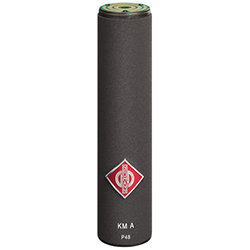
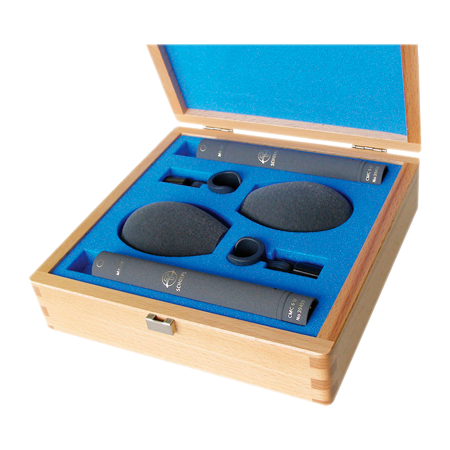
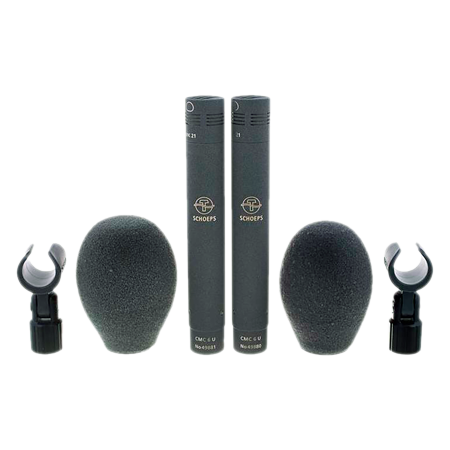
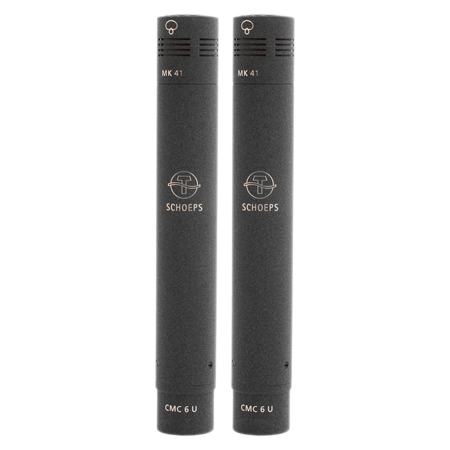
Schoeps CMC 6 Ug preamplifier with SG20 for MK series capsules.
ARTICLE N° 68514
Schoeps - CMC 6 U Mic-Amp
Schoeps - CMC 6 U Mic-Amp
632,50 €
excl VAT
including eco-part : 0,07 €
In Stock
Usually ships within 3 days
+infos
Guarantee 3
years
Anais
Tristan
Do you need help?
Presentation
The special feature of the CMC series microphone amplifiers is that they are designed to adapt the weak signals from high-impedance Schoeps capsules (screw-in capsules) to symmetrical transmission by microphone cable, which has a very low impedance.
The result is a low output impedance (insensitive to interference), low distortion and low weight.
The result is a low output impedance (insensitive to interference), low distortion and low weight.
Features
Power supply
Via +48 V phantom power supply
Frequency response, low limit
20 Hz
Frequency response, upper limit
20 kHz
Accessories included
Clip
Country of production
Germany
Color
Anthracite
Packaging
Single unit
Other features
-
Schoeps CMC 6 Ug
-
Dedicated microphone amplifier for Schoeps MK series capsules, to adapt the signals from high-impedance condenser capsules to the very low impedance balanced transmission of the microphone cable.
-
All operate with a transformerless, capacitorless output stage in Class A mode
-
Balanced output
-
Can be used with very long cables
-
Supplied with SG20 microphone clamp (20 mm diameter)
-
The CMC 6 is designed for standard 12 V and 48 V phantom powering, and its circuitry automatically recognises and adapts to the type of power supply (12 V or 48 V).
-
CMC 6 U technical specifications :
-
Frequency range: 20 Hz - 20 kHz
-
Maximum output voltage: 1 V (0 dBV) with 1 kΩ load
-
Maximum sound pressure level (THD<0.5%): 131 dB-SPL (P48, P12)
-
Low-cut filter: 20 Hz, 12 dB/Oct.
-
Minimum recommended load impedance: 1 kΩ
-
Output impedance: 42 Ω
-
Maximum cable length: > 400 m
-
SCHOEPS RFI Shield: Yes
-
Power supply, standard and valid range: P48 / 20-52 V; P12 / 10-13 V
-
Current consumption: 4 mA (P48); 8 mA (P12)
-
Common mode rejection (@ 1KHz): > 55 dB
-
Output: XLR-3M, analogue, 1 channel
-
Length: 116 mm
-
Diameter: 20 mm
-
Weight: 60 g
To find out more...
Difference with the CMC 6 :
The CMC 6 U microphone preamplifier normally has a gradual decay in response below 20 Hz to guard against infrasonic disturbance from various sources such as air movement and vibration. However, when using (omnidirectional) pressure transducers, particularly in digital recording, it may be desirable to pick up frequencies below 20 Hz without attenuation. The special technology of the CMC 6 U linear microphone preamplifiers makes this possible; on request, we can supply microphone preamplifiers with a flat response down to 10 Hz.
However, caution is advised when it comes to infrasound. Because pressure transducers can pick up very low frequencies, ventilation systems in large spaces (churches, concert halls) or the roar of traffic can create a problem. With pressure gradient sensors, the risk is even greater. They are much less sensitive to very low-frequency sounds, but react much more strongly to low-frequency mechanical stimuli such as air currents and structure-borne noise. These signals may be below the audible frequency range, but they can overload electronic circuits and produce significant distortion, particularly in circuits coupled to transformers.
The CMC 6 U microphone preamplifier normally has a gradual decay in response below 20 Hz to guard against infrasonic disturbance from various sources such as air movement and vibration. However, when using (omnidirectional) pressure transducers, particularly in digital recording, it may be desirable to pick up frequencies below 20 Hz without attenuation. The special technology of the CMC 6 U linear microphone preamplifiers makes this possible; on request, we can supply microphone preamplifiers with a flat response down to 10 Hz.
However, caution is advised when it comes to infrasound. Because pressure transducers can pick up very low frequencies, ventilation systems in large spaces (churches, concert halls) or the roar of traffic can create a problem. With pressure gradient sensors, the risk is even greater. They are much less sensitive to very low-frequency sounds, but react much more strongly to low-frequency mechanical stimuli such as air currents and structure-borne noise. These signals may be below the audible frequency range, but they can overload electronic circuits and produce significant distortion, particularly in circuits coupled to transformers.
You may also like


Spotlight on

Equivalent products
Tops of the brand
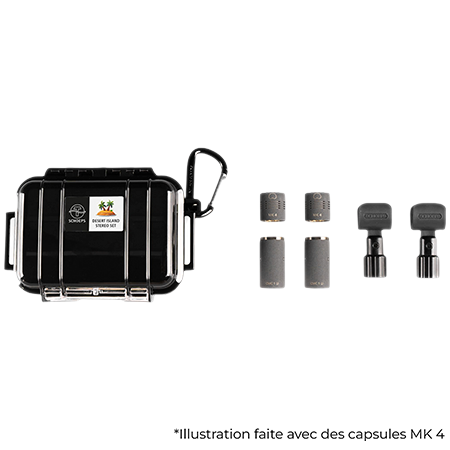



Schoeps - CMC 6 U Mic-Amp
632,50 € excl VAT