
FILTER
FILTER



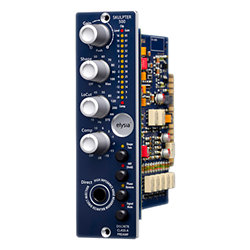
Elysia - Nvelope 500
604,17 €
excl VAT
In Stock
Usually ships within 4 days
+infos
Guarantee 3
years

Anais

Tristan
Do you need help?
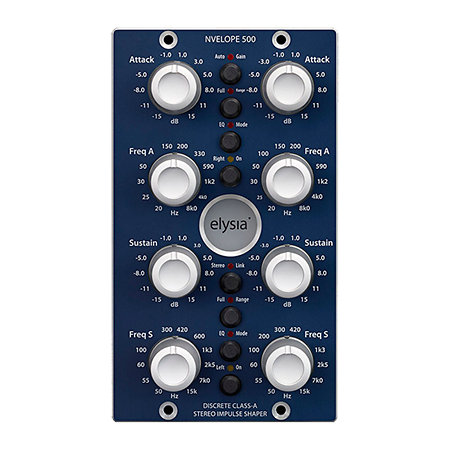
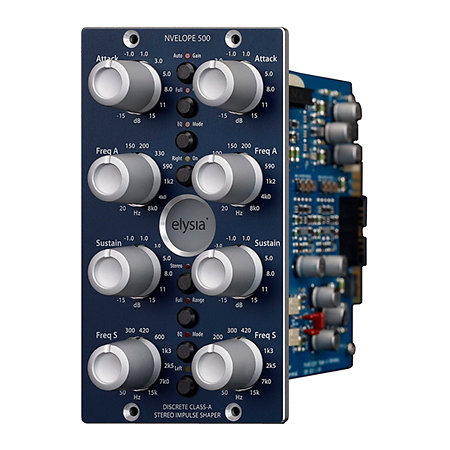
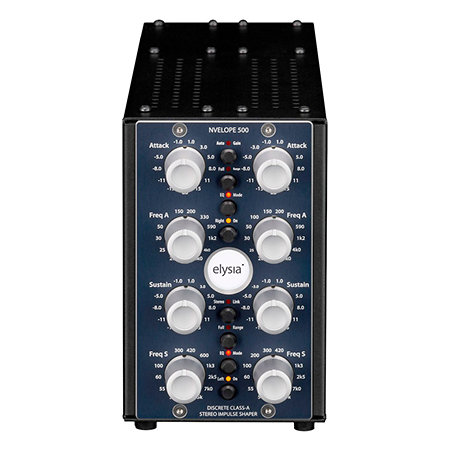
A dynamics processor whose function is to modify the impulse structure of sound.
ARTICLE N° 57270
Elysia - Nvelope 500
Elysia - Nvelope 500
604,17 €
excl VAT
In Stock
Usually ships within 4 days
+infos
Guarantee 3
years
Anais
Tristan
Do you need help?
Presentation
Requires a Rack 500!
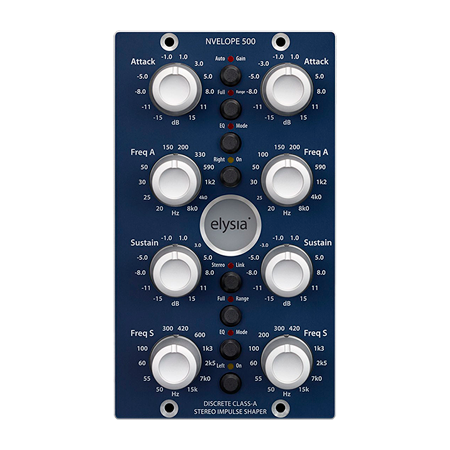
The nvelope 500 can modify the sound in more or less subtle ways, giving you control over its attack and sustain characteristics. You'll appreciate it just as much for re-drawing individual sounds as for an entire mix.
Unlike a compressor, it works independently of the volume of the source, so you don't have to manipulate several more or less complicated parameters to get the right result.
The nvelope 500's innovative Dual Band mode gives you greater control over processing, so you can meet the challenges of the most complex sources. By bypassing its dynamic section, it becomes a highly flexible high/low shelf EQ...
The nvelope 500 is a dynamics processor whose function is to modify the impulse structure of sound. This gives you access to the characteristics of the sound's envelope and allows you to directly change the intensity of its attack and sustain.
A drum kit can be made punchier or more aggressive by accentuating the attack, or softened if too much is perceived. Other applications include piano, guitar or bass, slapped or played with a pick. More generally, the nvelope 500 will give its full potential on sources containing a fairly significant attack structure.
The sustain parameter controls the space and its reflections. An instrument or reverb tail can sound drier or shorter by reducing the sustain. Increasing the sustain will give more depth or increase the impression of duration to the sound.
The nvelope 500 is therefore the ideal tool for sculpting separate sounds, but it can also be useful in a mix to place a sound more forward by adding more attack and less sustain, for example, or on the contrary to draw it in by reversing the setting.
The most special feature of the nvelope 500 is the Dual Band mode. You can choose the frequency range at which you want the attack and sustain parameters to operate. This allows you to achieve excellent results on complex sources such as a stereo bus without fear of artefacts.
We think you'll appreciate that this superb tool offers two truly independent channels that you can operate in linked stereo mode, whether you're in Full Range, Dual Band, or EQ mode.
When the nvelope 500 is not in linked stereo mode, the two channels can be used in parallel for two different processes. For example, you can process a signal in Dual Band mode on channel L and another in Full Range mode on channel R.
But you can also connect the output of channel L to the input of channel R and equalise the signal in EQ mode, then redraw its impulse response in Dual Band mode... Many other combinations are of course possible!
The nvelope 500 can modify the sound in more or less subtle ways, giving you control over its attack and sustain characteristics. You'll appreciate it just as much for re-drawing individual sounds as for an entire mix.
Unlike a compressor, it works independently of the volume of the source, so you don't have to manipulate several more or less complicated parameters to get the right result.
The nvelope 500's innovative Dual Band mode gives you greater control over processing, so you can meet the challenges of the most complex sources. By bypassing its dynamic section, it becomes a highly flexible high/low shelf EQ...
The nvelope 500 is a dynamics processor whose function is to modify the impulse structure of sound. This gives you access to the characteristics of the sound's envelope and allows you to directly change the intensity of its attack and sustain.
A drum kit can be made punchier or more aggressive by accentuating the attack, or softened if too much is perceived. Other applications include piano, guitar or bass, slapped or played with a pick. More generally, the nvelope 500 will give its full potential on sources containing a fairly significant attack structure.
The sustain parameter controls the space and its reflections. An instrument or reverb tail can sound drier or shorter by reducing the sustain. Increasing the sustain will give more depth or increase the impression of duration to the sound.
The nvelope 500 is therefore the ideal tool for sculpting separate sounds, but it can also be useful in a mix to place a sound more forward by adding more attack and less sustain, for example, or on the contrary to draw it in by reversing the setting.
The most special feature of the nvelope 500 is the Dual Band mode. You can choose the frequency range at which you want the attack and sustain parameters to operate. This allows you to achieve excellent results on complex sources such as a stereo bus without fear of artefacts.
We think you'll appreciate that this superb tool offers two truly independent channels that you can operate in linked stereo mode, whether you're in Full Range, Dual Band, or EQ mode.
When the nvelope 500 is not in linked stereo mode, the two channels can be used in parallel for two different processes. For example, you can process a signal in Dual Band mode on channel L and another in Full Range mode on channel R.
But you can also connect the output of channel L to the input of channel R and equalise the signal in EQ mode, then redraw its impulse response in Dual Band mode... Many other combinations are of course possible!
Features
Canals
2
Country of production
Germany
Packaging
Single unit
Other features
-
Elysia Nvelope 500 Class A stereo pulse sculptor with high/low shelf equalizer function.
-
500 Series rack format.
-
Wideband; Dual-band; EQ; mixed modes.
-
Dual mono or stereo link.
-
Automatic gain control.
-
Notched potentiometer.
-
Inputs and outputs: XLR and jack.
-
Bandwidth <10 Hz - 400 kHz (-3.0 dB).
-
THD+N @ 0 dBu, 20 Hz - 22 kHz: 0.006 %.
-
THD+N @ +10 dBu, 20 Hz - 22 kHz: 0.01 %.
-
Noise level, 20 Hz - 20 kHz (Full Range, EQ): -90.0 dBu.
-
Noise level, 20 Hz - 20 kHz (Dual Band) : -87.0 dBu (A-weighted)
-
Dynamic range, 20 Hz - 22 kHz: 112 dB.
-
Max input level: +21 dBu.
-
Max output level: +21 dBu.
-
Input impedance: 10 kOhm.
-
Output impedance: 68 Ohm.



Spotlight on

Equivalent products


Tops of the brand
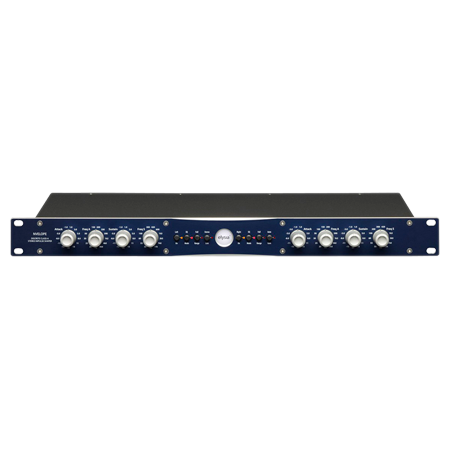
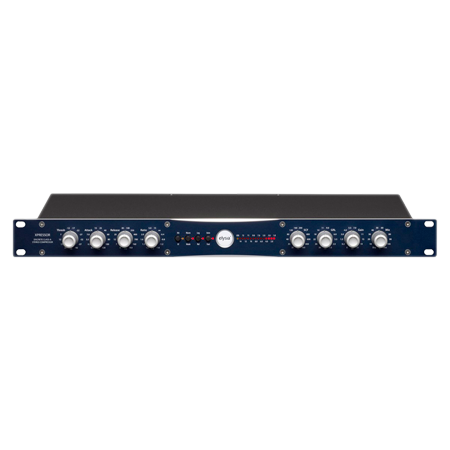
Elysia - Nvelope 500
604,17 € excl VAT