
FILTER
FILTER

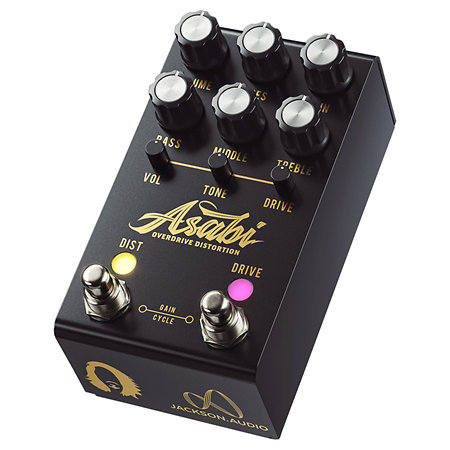


Jackson Audio - Asabi Overdrive Distortion Mateus Asato Signature
327,50 €
excl VAT
including eco-part : 0,90 €
In Stock
Usually ships within 3 days
+infos
Guarantee 3
years

Fred

Eric
Do you need help?
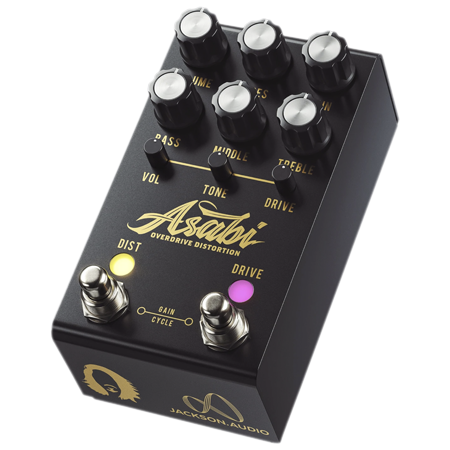
The Mateus Asato Signature pedal, the ASABI, is a distortion and overdrive pedal that contains a HUGE range of sounds and is also the first pedal in the world to offer analogue distortion plug-ins!
ARTICLE N° 83376
Jackson Audio - Asabi Overdrive Distortion Mateus Asato Signature
Jackson Audio - Asabi Overdrive Distortion Mateus Asato Signature
327,50 €
excl VAT
including eco-part : 0,90 €
In Stock
Usually ships within 3 days
+infos
Guarantee 3
years
Fred
Eric
Do you need help?
Presentation
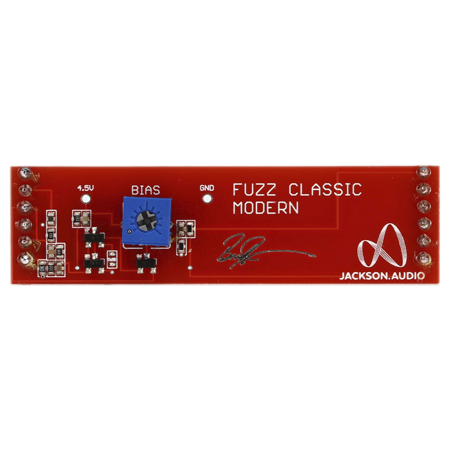
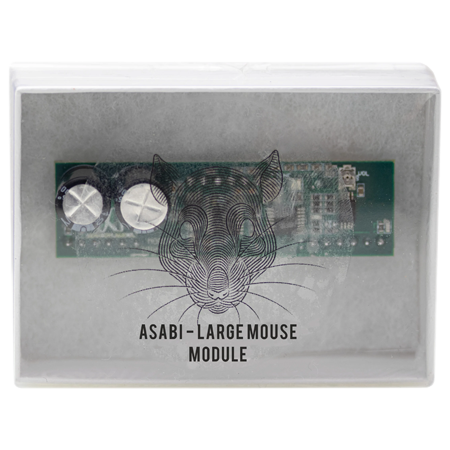
To keep things interesting on your pedalboard, Jackson Audio has developed replaceable distortion plug-ins so you can swap out the distortion circuitry in the ASABI without having to buy a whole new pedal!
The name ASABI, which means 'of unusual birth', was chosen by Mateus because it evokes the unique nature of this pedal, as well as his own family heritage.
The name ASABI, which means 'of unusual birth', was chosen by Mateus because it evokes the unique nature of this pedal, as well as his own family heritage.
Other features
-
Jackson Audio Asabi
-
Effects pedal
-
Type: Disto
-
Signature Mateus Asato model
-
True Bypass switch
-
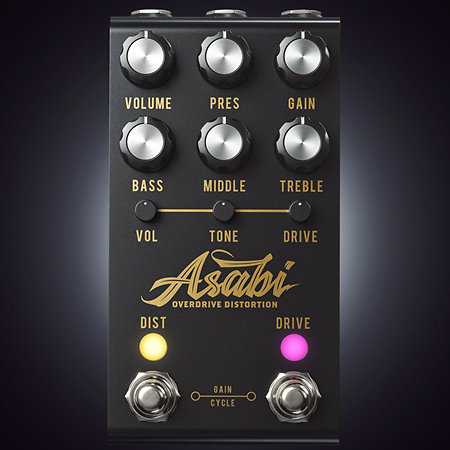
Controls : Volume, pres, gain, bass, middle, treble, vol, tone, drive
-
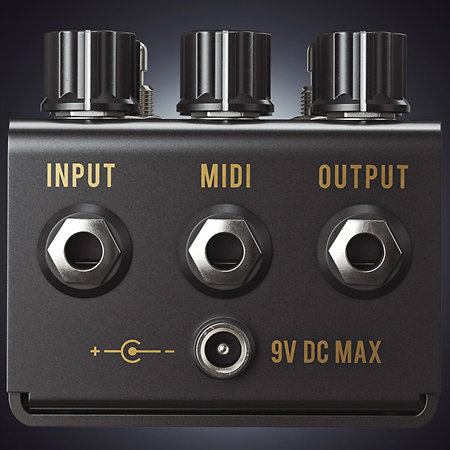
Input/Output connectors: 6.35 mm jack
-
Midi connection: 6.35 mm jack
-
Power supply: 9 V, mains adapter supplied separately
-
Dimensions: 124 x 69 x 68 mm
To find out more...
Asabi has 4 different diode-clipping presets, which can be activated with a long press:
- 1-Amber: Vintage Marshall. 2 blue diodes are used to symmetrically and evenly clip the high and low portions of your guitar's waveform. The diodes give much more dynamic range for a more open, less compressed sound, like a vintage Marshall.
- 2-Green: Classic Screamer. 2 symmetrical silicon diodes give the classic Tube Screamer-like saturation and compression.
- 3-Blue: Asymmetrical clipping. 3 asymmetrical diodes (2 silicon and 1 red diode) clip the high and low portions of your guitar's waveform to give a more complex sound, perfect for aggressive rhythm parts.
- 4-Magenta: Symmetrical clipping. 4 symmetrical silicon diodes clip the high and low portions of your guitar's waveform for a more focused, direct sound. MIDI features Take advantage of even more possibilities with your analogue pedal thanks to MIDI by controlling the clipping presets, Gain Cycle, EQ and the activation/deactivation of the overdrive and distortion channels.
Settings :
- Volume: overall volume of the distortion circuit.
- Pres: tone of the distortion circuit, can be used as a general tone control to adapt the pedal to brighter or darker rooms.
- Gain: maximum gain of the distortion circuit.
- Bass: neutral at noon and +/-20dB either side.
- Middle: neutral at noon and +/-20dB on each side, with a centre frequency of around 660 Hz.
- Treble: neutral at noon and +/-20dB on each side.
- Vol: overall volume of the overdrive circuit.
- Tone: tone of the overdrive circuit.
- Drive: overdrive channel gain.
- 1-Amber: Vintage Marshall. 2 blue diodes are used to symmetrically and evenly clip the high and low portions of your guitar's waveform. The diodes give much more dynamic range for a more open, less compressed sound, like a vintage Marshall.
- 2-Green: Classic Screamer. 2 symmetrical silicon diodes give the classic Tube Screamer-like saturation and compression.
- 3-Blue: Asymmetrical clipping. 3 asymmetrical diodes (2 silicon and 1 red diode) clip the high and low portions of your guitar's waveform to give a more complex sound, perfect for aggressive rhythm parts.
- 4-Magenta: Symmetrical clipping. 4 symmetrical silicon diodes clip the high and low portions of your guitar's waveform for a more focused, direct sound. MIDI features Take advantage of even more possibilities with your analogue pedal thanks to MIDI by controlling the clipping presets, Gain Cycle, EQ and the activation/deactivation of the overdrive and distortion channels.
Settings :
- Volume: overall volume of the distortion circuit.
- Pres: tone of the distortion circuit, can be used as a general tone control to adapt the pedal to brighter or darker rooms.
- Gain: maximum gain of the distortion circuit.
- Bass: neutral at noon and +/-20dB either side.
- Middle: neutral at noon and +/-20dB on each side, with a centre frequency of around 660 Hz.
- Treble: neutral at noon and +/-20dB on each side.
- Vol: overall volume of the overdrive circuit.
- Tone: tone of the overdrive circuit.
- Drive: overdrive channel gain.
Videos
You may also like




Spotlight on

Equivalent products


Tops of the brand
Jackson Audio - Asabi Overdrive Distortion Mateus Asato Signature
327,50 € excl VAT