FILTER
FILTER

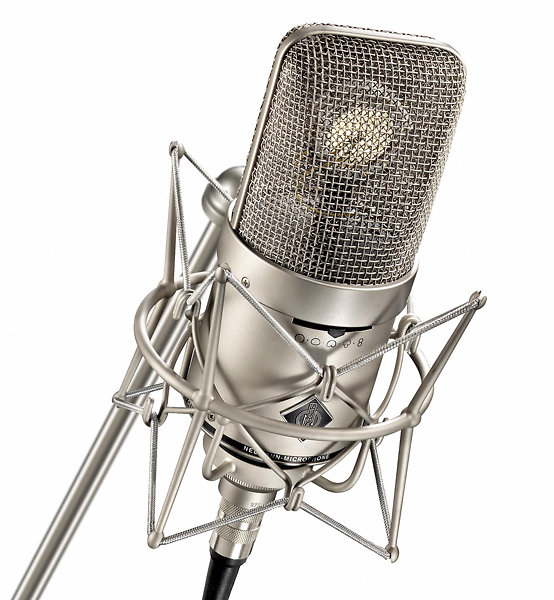

Neumann - M 149 TUBE
4 374,17 €
excl VAT
including eco-part : 0,07 €
In Stock
Usually ships within 3 days
+infos
Guarantee 3
years

Anais

Tristan
Do you need help?
The M 149 TUBE is a top-of-the-range universal tube microphone with a unique sound and a wide range of settings.
ARTICLE N° 9272
Neumann - M 149 TUBE
Neumann - M 149 TUBE
4 374,17 €
excl VAT
including eco-part : 0,07 €
In Stock
Usually ships within 3 days
+infos
Guarantee 3
years
Anais
Tristan
Do you need help?
Presentation
The Neumann M149 is a top-of-the-range universal tube microphone with a unique sound and numerous settings: 9 different polar patterns and a 7-position high-pass filter!
Other features
-
The M 149 TUBE is a top-of-the-range universal tube microphone with a unique sound.
-
Capsule derived from the legendary Neumann U 47 and M 49 models
-
Omni, wide cardioid, cardioid, hypercardioid, bidirectional polar patterns
-
Each directional pattern offers an additional intermediate position
-
Acoustic operating principle Pressure gradient transducer
-
7-position high-pass filter
-
Frequency response 20 Hz to 20 kHz
-
Sensitivity at 1 kHz, load 1 kOhm 34/47/62 mV/Pa* Nominal output impedance
-
Nominal output impedance 50 Ohms
-
Recommended load impedance 1000 Ohms
-
Noise level 16/13/11 dB(A)
-
Signal-to-noise ratio 66/69/71 dB
-
Maximum sound pressure level (lamp characteristic) 136 dB SPL
-
Maximum output level +18 dBu
-
Output connectors Microphone DIN 8M, Power supply XLR 3M
-
Power supply N 149 supplied with power cord
-
Aluminium storage case included
-
EA 170 integral elastic suspension with protective cover
-
Diameter 70 mm
-
Length 201 mm
To find out more...
The Neumann M 149 Tube is a dual-diaphragm microphone with variable directionality. Its K 49 capsule - famous for its use on the legendary U 47 and M 49 models - is followed by a tube acting as an impedance converter. Unlike previous designs - which used an audio transformer - the tube is complemented by a transformerless output circuit. The M 149 Tube can therefore feed long microphone cables without any coloration.
Two selectors are located beneath the large, wide-open grille. The front selector is used to select one of the 9 directional patterns available; the rear selector is a 7-position high-pass filter, for precise bass attenuation.
Applications
The 9 polar patterns available make this microphone an ideal choice for a wide range of recording situations.
Like its predecessors, the M 149 Tube is a superb vocal microphone, not only because of its capsule, but also because of its modern circuit design, characterised by an extremely low level of background noise.
Acoustic characteristics
The M 149 Tube is used vertically, with the sound arriving at the side where the trapezoidal Neumann logo is located. Its black colour identifies tube microphones. The front of the microphone also houses the selector for choosing the pick-up pattern.
The capsule is mounted on a suspension to prevent any vibrations being transmitted through the body. The surface beneath the capsule is conical in shape, to disperse any sound reflected from the upper acoustic half-space. This avoids any interference with the primary sound field arriving directly at the capsule.
A large grille surrounds the capsule. It is acoustically very open, for greater sonic realism.
Polar patterns
The directional pattern selector allows you to choose from 9 different patterns: omnidirectional, cardioid, wide cardioid, hypercardioid, bidirectional (figure of 8), plus an intermediate pattern between each main position.
Electrical characteristics
The M 149 Tube microphone circuit has been developed to go beyond traditional designs. We have selected a modern tube (triode) and combined its exceptional transmission characteristics with the advantages of our transformerless output circuit.
The aim was to provide a more controlled environment for the audio signal on its way from the capsule to the output section.
The final stage is an integrated amplifier, specifically designed for such applications. It has very low distortion (THD < 0.002% at ± 10 V), very low self-noise and high current capability.
As a result, the tube circuit is completely decoupled from the microphone output, and its characteristic response curve is unaffected by very high signal levels or variations in load conditions.
The relatively low load impedance and high current capability mean that long cable lengths (up to 300 metres) can be used without any degradation of the audio signal.
The tube amplifier adapts the very high output impedance of the capsule, and applies 10dB of gain to the audio signal, for optimum operating characteristics. Its dynamic range is impressive, with a peak output voltage of up to ±10 V at 20 mA.
The optimum operating point of the lamp is maintained throughout its life. Plate current and filament voltage are continuously regulated. A sensor wire detects any voltage drop in the microphone cable, enabling it to be compensated for at the power supply level. The lamp's temperature rise is gradual, with reverse current limitation, guaranteeing long life.
Filter
A 7-position selector switch is located at the rear of the microphone. It is used to select the cut-off frequency of the built-in high-pass filter, in half-octave steps between 20 Hz and 160 Hz (-3 dB). This filter is used to suppress low-frequency parasitic noise, for example from air-conditioning or air movements (wind, etc.).
In addition, this filter is an effective tool for controlling the audio signal when the microphone is placed close to the source, and the proximity effect alters the sound.
Supplied with
The specific N 149 A power supply is connected to the M 149 Tube via an 8-conductor cable. The audio output connector is a 3-pin XLR plug - and the signal is balanced.
The microphone is supplied in an attractive aluminium case, with an 8-conductor connection cable, an N 149 A power supply with its mains lead, an EA 170 integral elastic suspension and a protective cover.
Two selectors are located beneath the large, wide-open grille. The front selector is used to select one of the 9 directional patterns available; the rear selector is a 7-position high-pass filter, for precise bass attenuation.
Applications
The 9 polar patterns available make this microphone an ideal choice for a wide range of recording situations.
Like its predecessors, the M 149 Tube is a superb vocal microphone, not only because of its capsule, but also because of its modern circuit design, characterised by an extremely low level of background noise.
Acoustic characteristics
The M 149 Tube is used vertically, with the sound arriving at the side where the trapezoidal Neumann logo is located. Its black colour identifies tube microphones. The front of the microphone also houses the selector for choosing the pick-up pattern.
The capsule is mounted on a suspension to prevent any vibrations being transmitted through the body. The surface beneath the capsule is conical in shape, to disperse any sound reflected from the upper acoustic half-space. This avoids any interference with the primary sound field arriving directly at the capsule.
A large grille surrounds the capsule. It is acoustically very open, for greater sonic realism.
Polar patterns
The directional pattern selector allows you to choose from 9 different patterns: omnidirectional, cardioid, wide cardioid, hypercardioid, bidirectional (figure of 8), plus an intermediate pattern between each main position.
Electrical characteristics
The M 149 Tube microphone circuit has been developed to go beyond traditional designs. We have selected a modern tube (triode) and combined its exceptional transmission characteristics with the advantages of our transformerless output circuit.
The aim was to provide a more controlled environment for the audio signal on its way from the capsule to the output section.
The final stage is an integrated amplifier, specifically designed for such applications. It has very low distortion (THD < 0.002% at ± 10 V), very low self-noise and high current capability.
As a result, the tube circuit is completely decoupled from the microphone output, and its characteristic response curve is unaffected by very high signal levels or variations in load conditions.
The relatively low load impedance and high current capability mean that long cable lengths (up to 300 metres) can be used without any degradation of the audio signal.
The tube amplifier adapts the very high output impedance of the capsule, and applies 10dB of gain to the audio signal, for optimum operating characteristics. Its dynamic range is impressive, with a peak output voltage of up to ±10 V at 20 mA.
The optimum operating point of the lamp is maintained throughout its life. Plate current and filament voltage are continuously regulated. A sensor wire detects any voltage drop in the microphone cable, enabling it to be compensated for at the power supply level. The lamp's temperature rise is gradual, with reverse current limitation, guaranteeing long life.
Filter
A 7-position selector switch is located at the rear of the microphone. It is used to select the cut-off frequency of the built-in high-pass filter, in half-octave steps between 20 Hz and 160 Hz (-3 dB). This filter is used to suppress low-frequency parasitic noise, for example from air-conditioning or air movements (wind, etc.).
In addition, this filter is an effective tool for controlling the audio signal when the microphone is placed close to the source, and the proximity effect alters the sound.
Supplied with
The specific N 149 A power supply is connected to the M 149 Tube via an 8-conductor cable. The audio output connector is a 3-pin XLR plug - and the signal is balanced.
The microphone is supplied in an attractive aluminium case, with an 8-conductor connection cable, an N 149 A power supply with its mains lead, an EA 170 integral elastic suspension and a protective cover.
You may also like


Spotlight on

A legendary brand for decades, present in all the major recording studios, Neumann is a guarantee of high quality and professionalism. The Beatles, Natalie Cole, Celine Dion, Bryan Adams and Beyoncé... all use this exceptional brand with the famous U87, and the TLM49 at the top of the list. In home studio, the TLM103 and TLM102 condenser microphones are the most popular. For studio sound on stage opt for the KMS105. In recent years, Neumann has also offered the high-end KH80, KH120 and KH310 monitors.