
FILTER
FILTER
Focusrite - OctoPre MkII
This product is no longer available for sale
These models in stock may be of interest to you:





374,17 €
excl VAT
including eco-part : 0,90 €
Guarantee 3
years

Anais

Tristan
Do you need help?
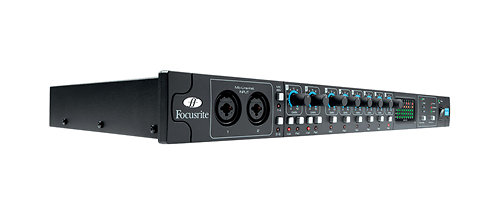
8 Channel Microphone Preamp High Quality, Focusrite sound at low prices! Ideal for Miking Batteries
ARTICLE N° 23194
Focusrite - OctoPre MkII
Focusrite - OctoPre MkII
374,17 €
excl VAT
including eco-part : 0,90 €
Guarantee 3
years
Anais
Tristan
Do you need help?
Presentation
Focusrite hits hard with a superb 8-channel preamp Ideal Studio and Sound recording Live Battery! The reference his "Made In England"!
Other features
-
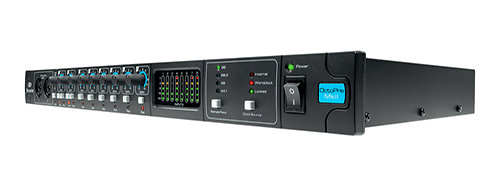
8 Focusrite mic preamps signed with phantom power, -10dB pad and VU meter to 5 LED for each channel
-
The first two channels can switch to instrument inputs
-
ADAT output 24-bit / 96kHz built
-
Optimized for the battery connector
-
Rackable 1U
-
Analog inputs:
-
Inputs mic / line XLR combined with auto-switching between mic (XLR) and line / instrument (6.35mm 3 points)
-
Mic / Line / Instrument 1 and 2: 2 mixed XLR front panel
-
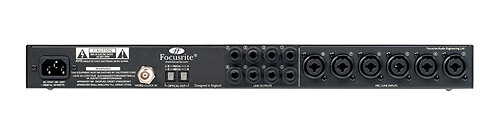
Mic / Line 3-8: 6 mixed XLR
-
Instrument: as above, switched to Instrument (inputs 1 and 2 only)
-
Micro Gain: +10 dB to +55 dB
-
Gain 1-8 line: -10 dB to +36 dB
-
Instrument Gain: +10 dB to +55 dB
-
Mitigation on inputs 1-8, ~ -10 dB
-
Phantom power switchable in groups of four mic inputs on channels 1-4 and 5-8
-
Maximum input level Mic and Instrument: +8 dBu (+16 dBu with input attenuator)
-
Maximum line input level: +22 dBu
-
Analog outputs:
-
8 jacks 6.35 mm 3-point line level
-
Nominal output level 0 dBFS = 16 dBu, balanced
-
Frequency response: 20 Hz - 20 kHz +/- 0.2 dB.
-
THD + B: < 0.0010% (-100dB) (measured with an input to 0 dBFS and a bandpass filter 20 Hz / 22 kHz, unweighted)
-
Input / Output Numérques:
-
ADAT Outputs 1 and 2: 8 channels (44.1 / 48 kHz) 4 multiplexing channels S-MUX (88.2 / 96 kHz, 8 channels in total)
-
Standard power supply
-
Weight: 3 kg
-
Dimensions: 35 cm x 4.5 cm x 26.5 cm
-
Supplied with: Electric Power Cable IEC, Feet Self-adhesive rubber, registration card
To find out more...
The eight audio inputs use Neutrik mixed. They can accept XLR male connectors, jacks
6.35 mm 3 points (TRS / symmetric) or 2 points (TS / unbalanced).
If an XLR cable is used, then the preamp is automatically set to microphone level.
If a jack cable is used, then the preamp is set to line level. For instrument signals connected to the inputs 1 and
2 use the Inst button to switch to high-impedance instrument level.
Preamp gain
The gain of each preamp should be set according to the level of the input source. Use the LED level display for
controlling the signal level of each preamplifier.
Start with the preamp gain set to minimum. Ask the artist you register to play at the peak level
required by its interpretation.
If the LED level display indicates a high level already, then turn the attenuator (pad) for this channel.
Then slowly turn up the gain until the signal level reaches the orange diode (-3 dB).
Then turn down the gain of a few dB.
This should ensure that the signal level never quite reaches the red (0 dB) and saturates the analog / digital converters.
Phantom Power
Two phantom power switches activate the +48 V phantom power for microphone inputs 1-4 and 5-8. A
Phantom power is required by most condenser microphones. Phantom power is sent only
XLR connectors of the mixed input, so if a group of 4 preamps is shared between the micro level and signal level signals
line, the + 48V is sent only to the microphones.
Dynamic microphones do not require phantom power, but most work well when it is provided.
Ribbon microphones do not require phantom power and may be damaged if they receive one.
If you do not know what it is for your microphone, do NOT send it to phantom power before they have confirmation
its characteristics by the manufacturer.
Line Outputs
Use the line outputs to connect to OctoPre MkII line inputs of any analog device.
The OctoPre MkII accepts jacks 3 points (TRS / symmetric) or 2 points (TS / unbalanced).
The jacks 3 points (TRS) give a maximum signal level 16 dBu while the jacks 2 points (TS) give a signal level
+10 dBu maximum.
Digital outputs
Use the ADAT outputs to connect to the OctoPre MkII ADAT inputs of any digital camera.
The OctoPre MkII transmit 8 channels of audio at 44.1 / 48kHz via a single optical cable. The same 8 channels are sent by
two optical ports.
The forward OctoPre MkII 4-88.2 / 96 kHz audio channels via a single optical cable. The channels 1-4 and 5-8 are respectively
sent by each optical port.
Use the Sample Rate selector to select the desired sample rate. You must ensure that the
selected sample rate on OctoPre MkII matches that set on the digital receiver.
Digital timing
There are two sync options:
The MkII OctoPre as the clock source (master):
Connect OctoPre MkII digital camera by the ADAT and make sure the receiving device is set to receive
the clock of the ADAT input (also check that the sampling rates of both devices match).
The Clock Source selector on the OctoPre MkII must be set to Internal (internal clock) and the Locked LED (locked) will
glows green.
The MkII OctoPre as slave clock source:
OctoPre MkII connect to the digital camera and connect ADAT by a BNC cable (from the receiver or any other
camera digital channel) to the Word Clock input (also check that the sampling rates of both devices
match).
The Clock Source selector on the OctoPre MkII must be set to W / C (Word Clock) and Locked LED (locked) will be lit
green.
Focusrite's name was born in 1985 when the legendary designer of the Forté console, Rupert Neve, creates a company after retiring from the company that bore his name. Since then the brand led by Phil Dudderidge has continued to develop high quality preamps and analog processors that have now become standards in professional audio material and inspire respect in the studios. The British firm was one of the first to present, with the RED series, allies quality products with innovative aesthetics. With its fair reputation, the brand has declined its range with more economical series, the Platinum series, which is enjoyed by musicians and home studio owners. Always at the forefront, the British manufacturer recently introduced the Liquid Channel, a new concept integrating analog and digital with the latest convolution processes. Moreover, the brand extends its field of activity in the home studio software market with the Saffire Firewire interface.
6.35 mm 3 points (TRS / symmetric) or 2 points (TS / unbalanced).
If an XLR cable is used, then the preamp is automatically set to microphone level.
If a jack cable is used, then the preamp is set to line level. For instrument signals connected to the inputs 1 and
2 use the Inst button to switch to high-impedance instrument level.
Preamp gain
The gain of each preamp should be set according to the level of the input source. Use the LED level display for
controlling the signal level of each preamplifier.
Start with the preamp gain set to minimum. Ask the artist you register to play at the peak level
required by its interpretation.
If the LED level display indicates a high level already, then turn the attenuator (pad) for this channel.
Then slowly turn up the gain until the signal level reaches the orange diode (-3 dB).
Then turn down the gain of a few dB.
This should ensure that the signal level never quite reaches the red (0 dB) and saturates the analog / digital converters.
Phantom Power
Two phantom power switches activate the +48 V phantom power for microphone inputs 1-4 and 5-8. A
Phantom power is required by most condenser microphones. Phantom power is sent only
XLR connectors of the mixed input, so if a group of 4 preamps is shared between the micro level and signal level signals
line, the + 48V is sent only to the microphones.
Dynamic microphones do not require phantom power, but most work well when it is provided.
Ribbon microphones do not require phantom power and may be damaged if they receive one.
If you do not know what it is for your microphone, do NOT send it to phantom power before they have confirmation
its characteristics by the manufacturer.
Line Outputs
Use the line outputs to connect to OctoPre MkII line inputs of any analog device.
The OctoPre MkII accepts jacks 3 points (TRS / symmetric) or 2 points (TS / unbalanced).
The jacks 3 points (TRS) give a maximum signal level 16 dBu while the jacks 2 points (TS) give a signal level
+10 dBu maximum.
Digital outputs
Use the ADAT outputs to connect to the OctoPre MkII ADAT inputs of any digital camera.
The OctoPre MkII transmit 8 channels of audio at 44.1 / 48kHz via a single optical cable. The same 8 channels are sent by
two optical ports.
The forward OctoPre MkII 4-88.2 / 96 kHz audio channels via a single optical cable. The channels 1-4 and 5-8 are respectively
sent by each optical port.
Use the Sample Rate selector to select the desired sample rate. You must ensure that the
selected sample rate on OctoPre MkII matches that set on the digital receiver.
Digital timing
There are two sync options:
The MkII OctoPre as the clock source (master):
Connect OctoPre MkII digital camera by the ADAT and make sure the receiving device is set to receive
the clock of the ADAT input (also check that the sampling rates of both devices match).
The Clock Source selector on the OctoPre MkII must be set to Internal (internal clock) and the Locked LED (locked) will
glows green.
The MkII OctoPre as slave clock source:
OctoPre MkII connect to the digital camera and connect ADAT by a BNC cable (from the receiver or any other
camera digital channel) to the Word Clock input (also check that the sampling rates of both devices
match).
The Clock Source selector on the OctoPre MkII must be set to W / C (Word Clock) and Locked LED (locked) will be lit
green.
Focusrite's name was born in 1985 when the legendary designer of the Forté console, Rupert Neve, creates a company after retiring from the company that bore his name. Since then the brand led by Phil Dudderidge has continued to develop high quality preamps and analog processors that have now become standards in professional audio material and inspire respect in the studios. The British firm was one of the first to present, with the RED series, allies quality products with innovative aesthetics. With its fair reputation, the brand has declined its range with more economical series, the Platinum series, which is enjoyed by musicians and home studio owners. Always at the forefront, the British manufacturer recently introduced the Liquid Channel, a new concept integrating analog and digital with the latest convolution processes. Moreover, the brand extends its field of activity in the home studio software market with the Saffire Firewire interface.
Spotlight on

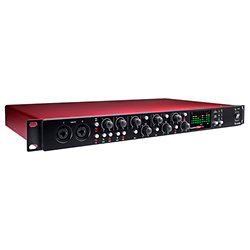
Focusrite is a British brand specialized in home studio and pro studio products. Initially known for the high-end consoles created by its founder, sound engineer Rupert Neve, the brand now offers products for every purpose. From professional quality microphone preamps to audio interfaces and even complete recording packages, Focusrite has the quality gear you deserve. From the best-selling Scarlett range, ideal for home studio use, to the ISA range, including Clarett+ and RedNet, there is something for everyone!
Equivalent products
Tops of the brand
Focusrite - OctoPre MkII
374,17 € excl VAT