FILTER

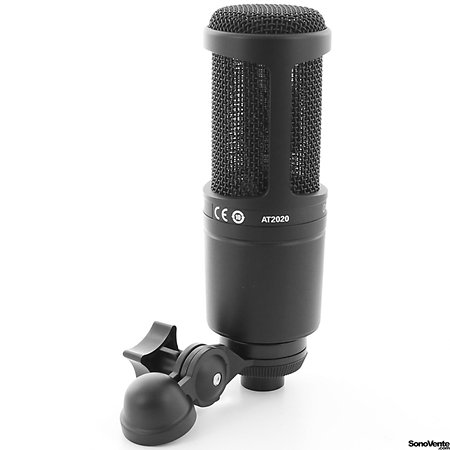
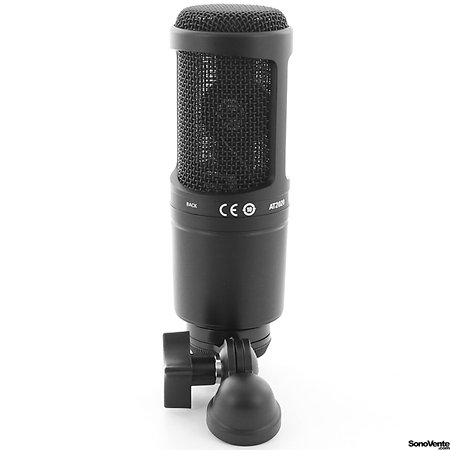
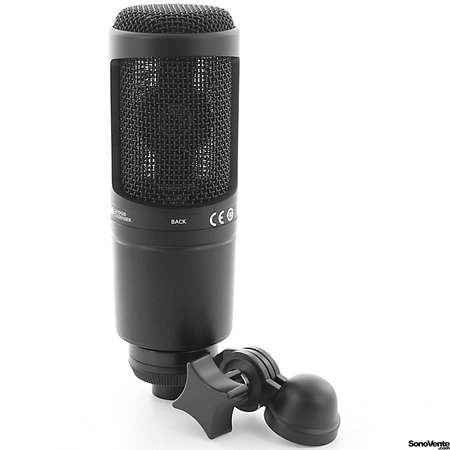
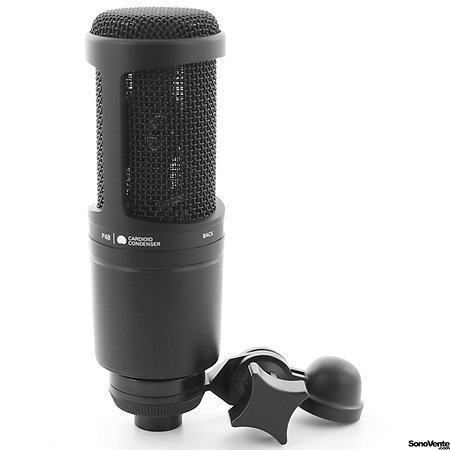
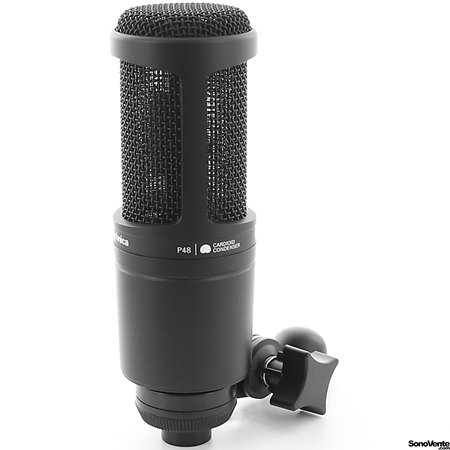
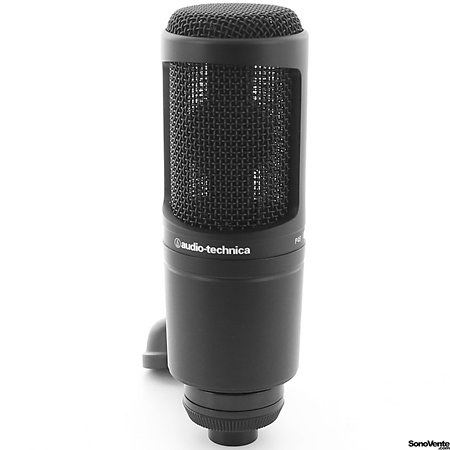


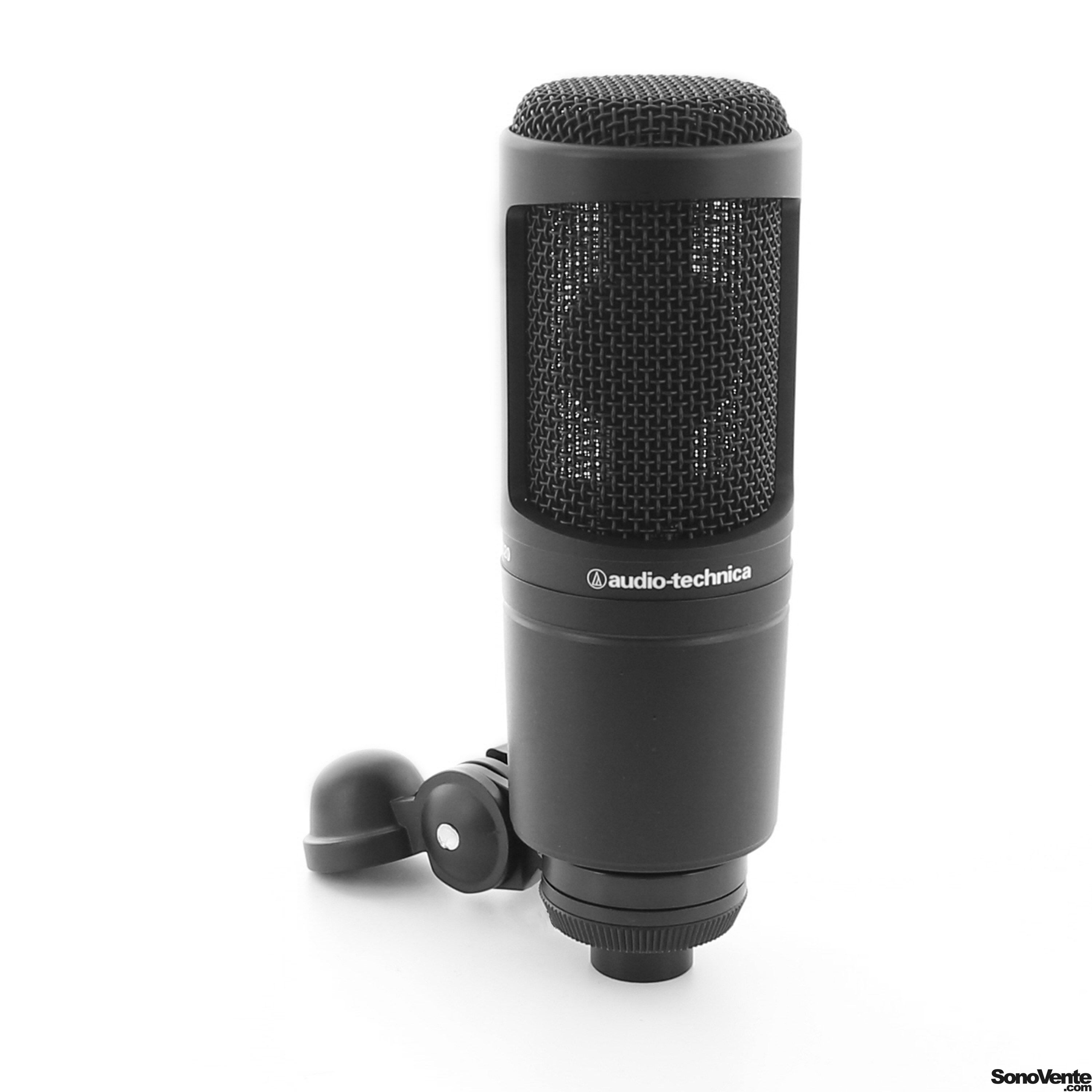
Audio Technica - AT2020


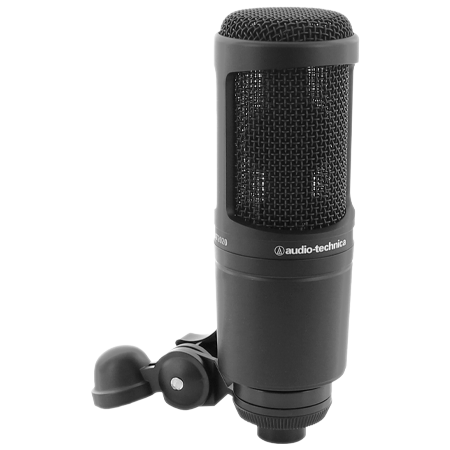
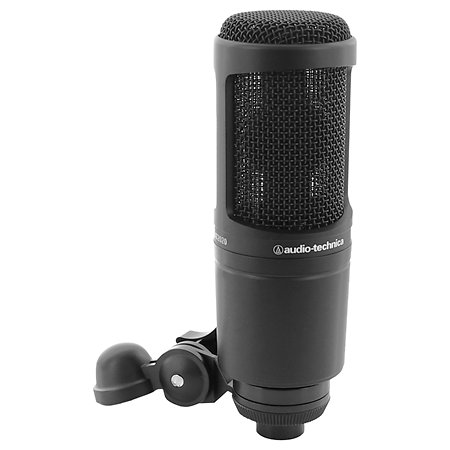
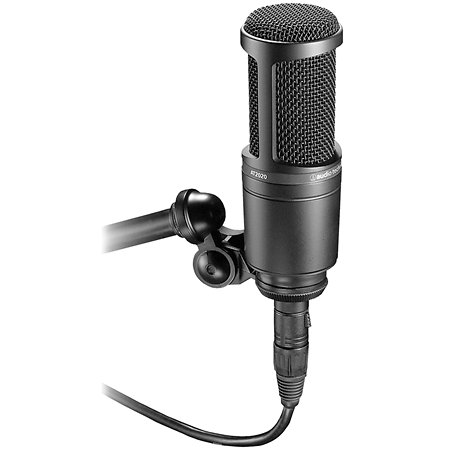
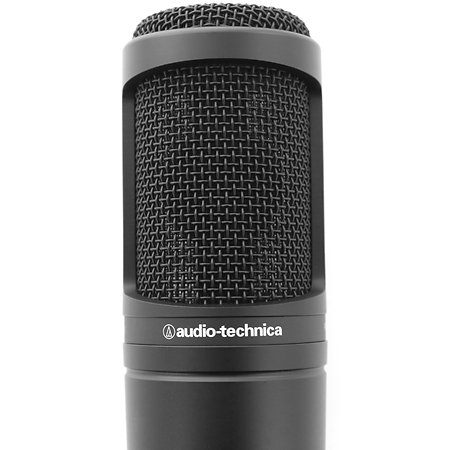
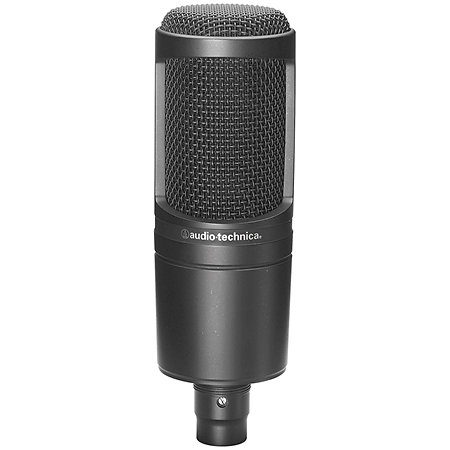
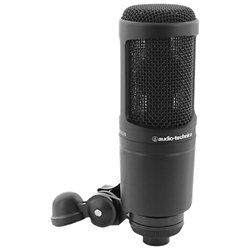
The Audio-Technica AT2020 is a cardioid condenser microphone, ideal for vocals, acoustic instruments and podcasts. It offers accurate sound pick-up, extended frequency response and a robust construction suitable for both professional and domestic environments.
Presentation
Featuring a high-precision capsule and a cardioid pick-up pattern, it guarantees clear, detailed sound pick-up while minimising unwanted noise from the sides and rear.
Ideal for vocals, acoustic instruments and podcasts, this microphone stands out for its versatility and exceptional sound quality.
With an extended frequency response from 20 Hz to 20 kHz, the AT2020 delivers accurate reproduction of sound nuances, capturing every detail with remarkable clarity.
Its maximum sound pressure level (SPL) of 144 dB enables it to handle intense sound sources without distortion, making it the perfect choice for a variety of applications, from the recording studio to live sound reinforcement.
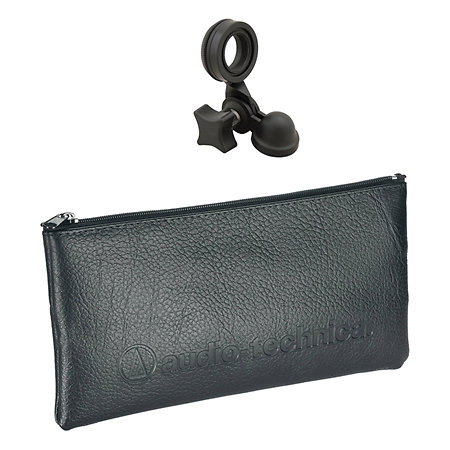
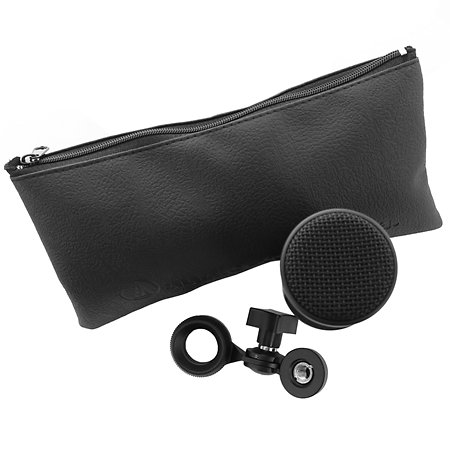
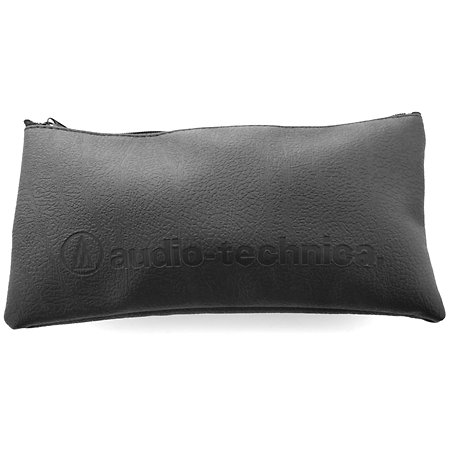
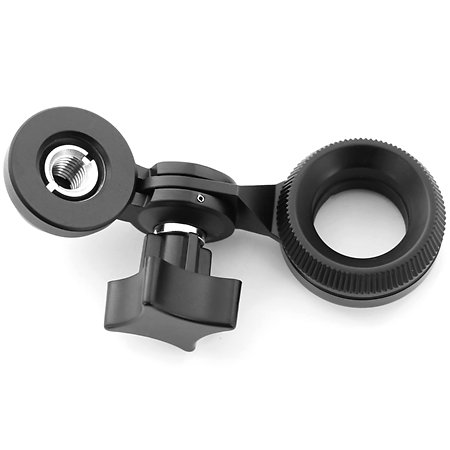
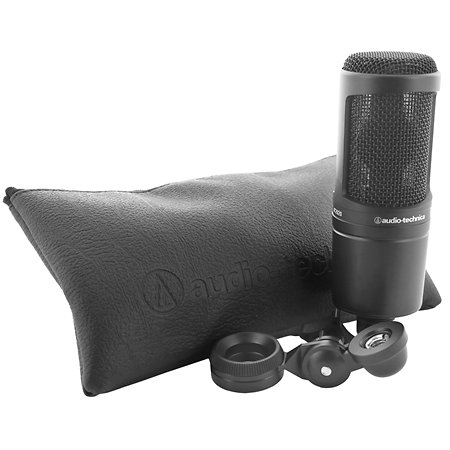
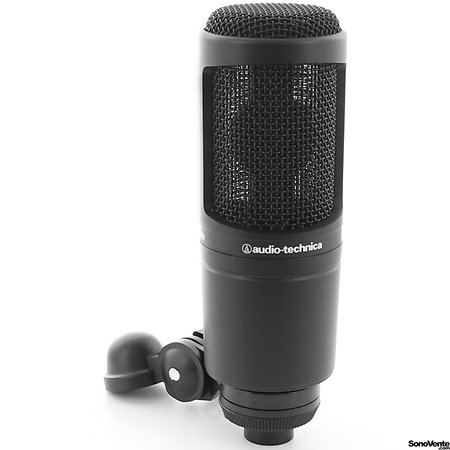
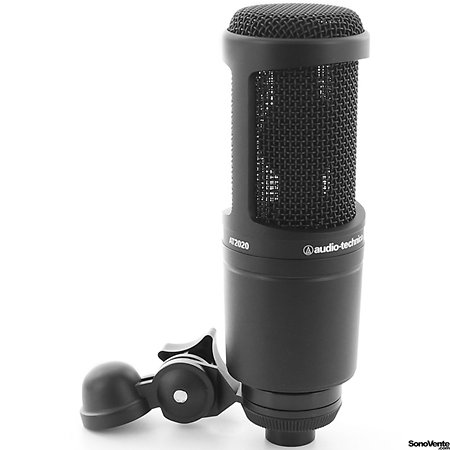
Its robust metal construction and compact size make it a durable microphone that's easy to integrate into any setup. Supplied with a swivel clip and carrying pouch, the AT2020 is ready to accompany you in all your creative endeavours.
Popular with professionals and amateurs alike, it's an essential reference for quality sound at an affordable price.
Other features
-
Audio-Technica AT2020
-
Studio microphone
-
Type: Permanently polarized condenser with fixed-loaded plate
-
Directivity: Cardioid
-
Frequency response: 20-20,000 Hz
-
Output level: -37 dB (14,1 mV) ref 1V/Pa*
-
Impedance: 100 ohms
-
Pressure level: 144 dB SPL, 1 kHz at 1% R.H.D.
-
Dynamic range (typical): 124 dB, 1 kHz at max. SPL
-
Signal-to-noise ratio: 74 dB, 1 kHz/Pa
-
Phantom power: 48V DC, 2 mA typical
-
Weight: (excluding accessories) 345 g (12.1 oz)
-
Dimensions: Length 162.0 mm (6.38"), maximum body diameter 52.0 mm (2.05")
-
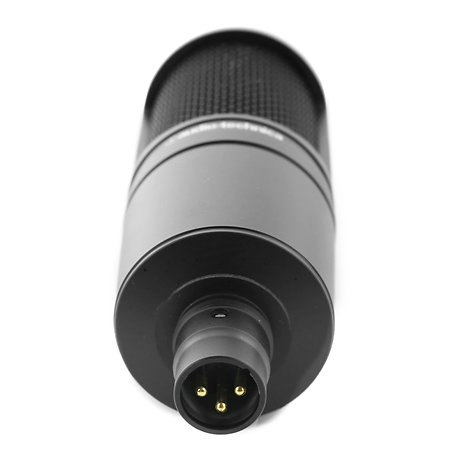
Output connector: Integrated 3-pin XLRM type
-
Supplied accessories: Fixing for 5/8"-27" threaded feet
-
Threaded adaptor for 5/8"-27 to 3/8"-16; protective soft case
-
One of the best value in side-capture studio condenser microphone technology
-
Ideal for studio applications
-
High SPL and exceptional dynamic range make the microphone particularly versatile
-
Custom-built 16mm low-mass diaphragm
-
providing extended frequency response and superior transient response
-
Cardioid polar pattern for improved sound source isolation and reduced side and rear pick-up
-
Threaded, swivel-mounted stand ensures secure mounting and easy, accurate microphone positioning
To find out more...
It requires 48V DC phantom power, which can be supplied by a mixer or console, or by an independent source to be connected in series, such as the
source such as Audio-Technica's AT8801 single channel or CP8506 four channel phantom power supply.
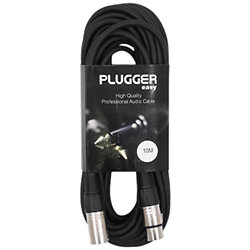
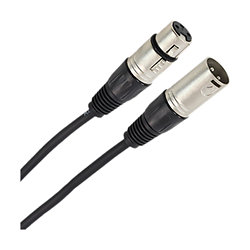
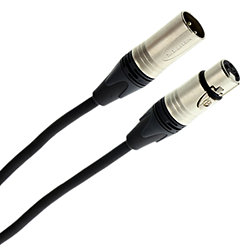
The microphone output is balanced low impedance, XLR male, 3-pin. The balanced signal is between pins 2 and 3,
the hotspot is in two (the positive voltage on the hotspot is generated by positive acoustic pressure on the capsule).
The earth (shield) is on pin 1.
To avoid phase cancellation and poor sound quality, all microphone cables must be connected in a consistent manner: pin 1 to pin 1, etc.
Avoid leaving the microphone in direct sunlight or in places where the temperature exceeds 43°C (110°F) for long periods. Excessive humidity should also be avoided.
Videos
You may also like




User reviews Static Microphone
AT2020 Audio Technica
/5
17 User reviews
Pensez à le compléter d'un pré amp même si vous avez une bonne carte son.
Accessories
Spotlight on

Founded in 1962, Japan's Audio-Technica is a leading manufacturer of AT4033, AT4041 and Artist Elite studio and stage microphones, AT2020 USB+ podcast microphones, professional wireless systems, ATH-M series headphones, AT-LP140XP turntables and DJ accessories. Developments such as Uniguard's anti-RFI technology, which protects microphones from WiFi, Bluetooth and other modern sources of radio interference, demonstrate their commitment to providing musicians and engineers with the high-quality sound they've come to expect.