
FILTER
FILTER



Waldorf Music - Nave (licence)
120,83 €
excl VAT
In Stock

Anais

Tristan
Do you need help?
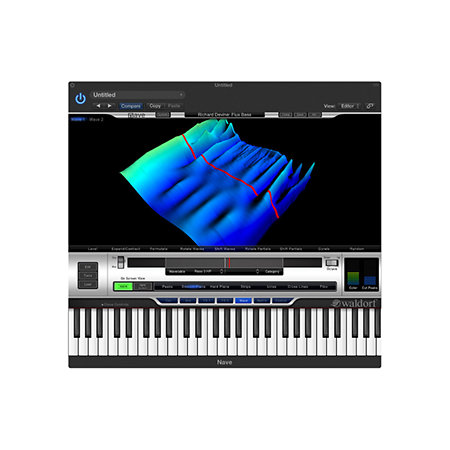
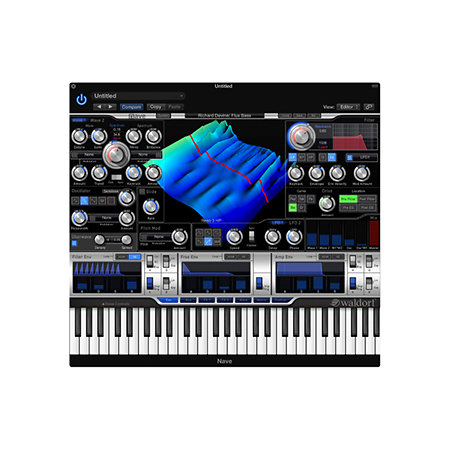
Waldorf Nave is a virtual wavetable synthesizer, compatible with Mac and PC in VST, Audio Units, AAX native and NKS formats. Nave provides superb sounds, from spacey pads to wavetable explorations and cutting leads to powerful basses, but also an abundance of incredibly creative sound worlds, many produced by some of the best professional sound designers.
ARTICLE N° 62924
Waldorf Music - Nave (licence)
Waldorf Music - Nave (licence)
120,83 €
excl VAT
In Stock
Anais
Tristan
Do you need help?
Features
AAX Native
Yes
Audio units
Yes
Autonomous
No
Compatibility
MacOS, Windows
Updates and upgrades
No
Packaging
Download License
Other features
-
Waldorf Nave
-
Download licence: you will receive your serial by email, with the invoice
-
Wavetable Synth VI for creating soundscapes
-
Hundreds of presets by professional sound designers.
-
4-track recorder for recording, mixing and bouncing tracks.
-
2 independent wavetable oscillators for greater control.
-
Speech Synthesizer for wavetables
-
Library of built-in effects
-
Intuitive keyboard interface
-
Blades with optional musical scales and chord mode
-
MIDI device manager for external hardware and virtual connections.
-
System requirements :
-
WINDOWS
-
Microsoft Windows - 7, 8.1 & 10
-
Intel or AMD based PC
-
64 MB free RAM
-
200 MB free hard disk space
-
32 and 64 bit - VST 2, VST 3 or AAX Host, such as: Steinberg Cubase 7, 7.5, 8, 8.5 and 9 / Steinberg Nuendo 7 / Avid ProTools 11 and 12 / Bitwig Studio 2 / Ableton Live 9 / Presonus Studio One 3 / Native Instruments Maschine 2 or Komplete Kontrol.
-
MAC
-
Apple OSX - 10.9.5, 10.10.10.5, 10.11.6 and 10.12.x (not compatible with High Sierra)
-
64 MB free RAM
-
200 MB hard disk space
-
32- and 64-bit - VST2, VST3, AU and AAX Host, such as Steinberg Cubase 7, 7.5, 8, 8.5 and 9 / Nuendo 7 / Avid ProTools 11 and 12 / Bitwig Studio 2 / Ableton Live 9 / Presonus Studio One 3 / Apple Logic X / Native Instruments Maschine 2 or Komplete Kontrol.
To find out more...
Created by the former distributor of the PPG brand between 1975 and 1987, the Waldorf brand was launched in 1988. The Microwave was the first Waldorf synthesiser to be based on a wavetable concept, and was soon a huge success, as were all the models that followed: Microwave II, Microwave XT.
You may also like


Spotlight on

Equivalent products

Tops of the brand


Waldorf Music - Nave (licence)
120,83 € excl VAT